
Commercial Solar Cleaning Guide for Asset Owners
By Marquis Mason ·
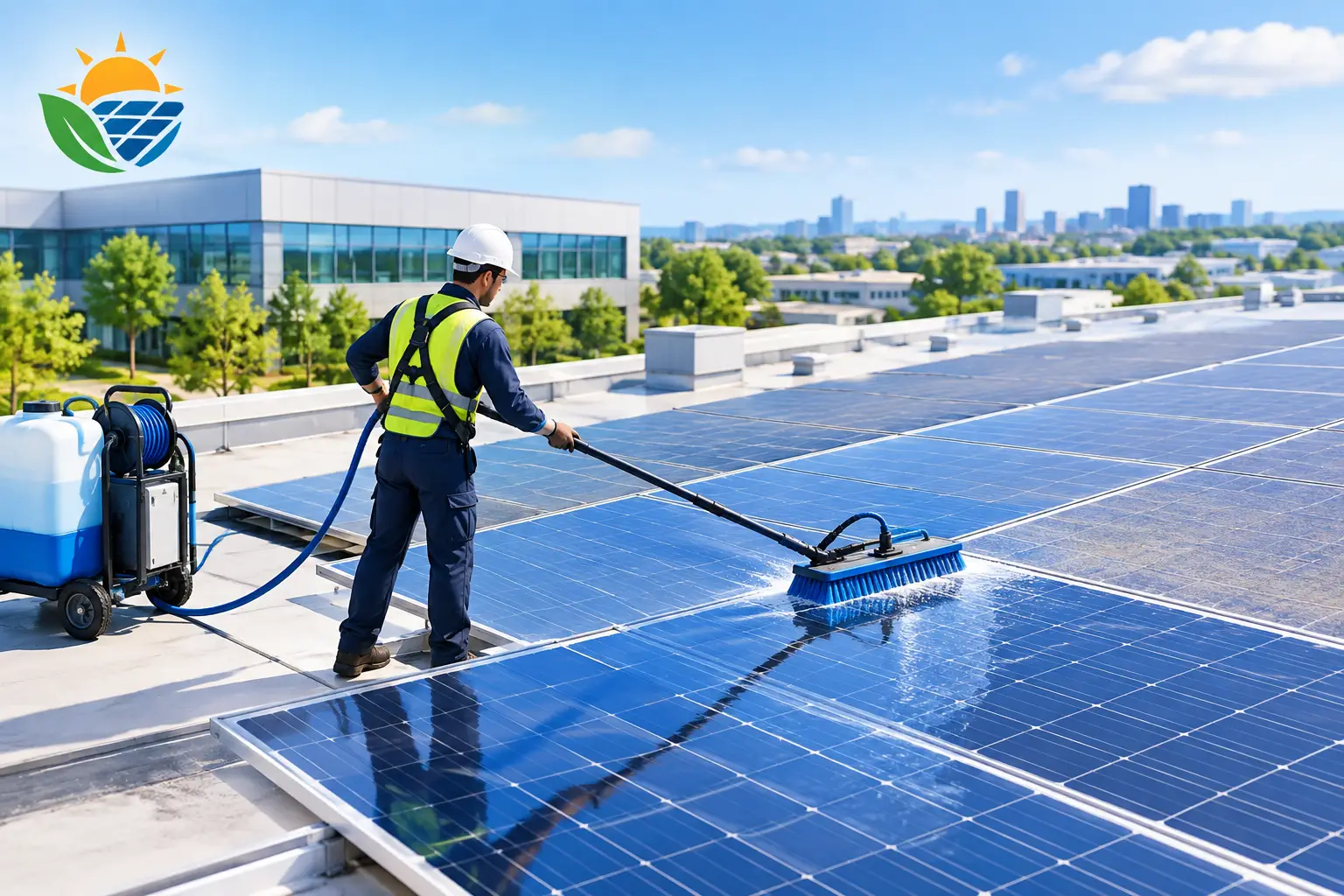
A commercial array can look clean from the ground and still be leaving production on the roof. A thin, uneven film of pollen, field dust, traffic residue, or mineral deposits changes how light reaches the cells. This commercial solar cleaning guide is built for owners and facility teams who need to make a maintenance decision based on output, asset risk, and documentation - not appearances.
For a solar asset with real operating costs and performance targets, cleaning is not a cosmetic service. It is a controlled maintenance task. The right approach can recover lost production without creating the scratches, thermal shock, electrical hazards, or warranty questions that come from improvised cleaning.
Start With the Loss, Not the Dirt
Soiling loss is not the same at every property. A warehouse near a busy road may collect fine particulate residue. A farm system may see feed dust, chaff, and seasonal field activity. Buildings surrounded by mature trees can accumulate pollen, needles, leaf tannins, and bird droppings. In Southern Wisconsin, spring pollen and summer agricultural dust can create a noticeable layer quickly, while winter grime may remain in place until snow cover clears.
The practical question is whether that material is suppressing production enough to justify cleaning. Review monitoring data before and after comparable weather periods. Look for a sustained gap between expected and actual output, strings or sections that lag similar-facing arrays, or a downward trend that cannot be explained by weather, shading, equipment faults, or curtailment.
A visible inspection still matters. Bird droppings, for example, are not just a general film across the glass. They can create concentrated shade over individual cells. That localized shading can contribute to hot spots, where affected cells run hotter than surrounding cells. The risk is not that every dirty panel will fail. The risk is allowing recurring, concentrated soiling to remain unaddressed on an asset expected to operate for decades.
Document the condition before work begins. Date-stamped photos, notes on the type and extent of soiling, and baseline production records establish why maintenance was performed. That record is useful for internal planning, warranty conversations, insurance claims, and future cleaning decisions.
Use a Manufacturer-Safe Cleaning Method
Commercial solar cleaning should follow the panel manufacturer’s instructions first. Those instructions commonly prohibit abrasive materials, harsh chemicals, high-pressure washing, and aggressive scraping. A panel may be durable enough to withstand hail and weather, but its glass surface, anti-reflective coating, frames, seals, wiring, and rooftop environment still require care.
The safest professional method for most photovoltaic arrays uses purified deionized water and soft brushes designed for solar glass. Deionized water has had dissolved minerals removed. That matters because ordinary tap water can dry into mineral spotting, especially when water quality is hard or when panels heat up quickly in direct sun. Purified water also reduces the need for detergents that can leave residue or fall into a manufacturer’s restricted-product category.
Soft rotary brushes provide controlled agitation for bonded dust and environmental film without treating the glass like a sidewalk. The technician should use low contact pressure, maintain clean brush heads, and work in a pattern that avoids dragging debris across the surface. The goal is a spot-free finish and restored light transmission, not simply moving dirt around.
Do not substitute a pressure washer for a solar-specific process. High pressure can force water where it does not belong, disturb seals or wiring components, and create unnecessary liability around rooftop equipment. Dry brushing is another poor shortcut. Fine grit can act like sandpaper when rubbed across glass.
Temperature and timing deserve attention too. Cleaning very hot glass with cold water may create avoidable thermal stress. Early morning, overcast conditions, or cooler portions of the day often allow a safer, more effective process. The best schedule depends on site access, weather, system layout, and the soiling source.
Protect the Roof and Electrical System
Cleaning panels is only one part of the job. On a commercial roof, crew movement, fall protection, access paths, drains, skylights, conduit, and fragile surfaces all matter. A qualified provider should be insured, understand OSHA-required practices, and have a defined approach to rooftop safety.
The work should also respect the electrical system. Panels, connectors, junction boxes, conductors, and rooftop penetrations are not targets for spray or scrubbing. If a technician identifies damaged glass, loose hardware, nesting activity, discoloration, exposed wiring, or another apparent issue, that should be documented and referred to the appropriate solar or electrical professional. Cleaning is maintenance, not a substitute for repair.
Set a Cleaning Interval Based on Your Site
There is no universal calendar that fits every commercial array. Some properties benefit from seasonal cleaning. Others may need one annual service, targeted spot cleaning, or a cleaning cycle tied to crop activity, construction, nearby road work, or persistent bird pressure.
Start by tracking production and site conditions for a full year. Then compare the cost of service against recovered energy, avoided risk, and the value of a consistent maintenance record. If output improves materially after cleaning under similar weather conditions, the site has evidence for a repeat interval. If the recovery is modest, a less frequent schedule may be more sensible.
At the Wisconsin State Capitol, Solar Alchemist documented a 16.7% production lift after cleaning. That result should not be used as a blanket promise for another property. Array tilt, soil type, weather, shading, system age, and time since the last cleaning all affect results. It does show why measured before-and-after performance is more useful than guessing from a rooftop photo.
For multi-site owners, standardize the process even when the interval varies. Use the same inspection notes, cleaning specifications, photos, production review window, and invoice documentation across locations. That makes it easier to identify which site conditions consistently justify more frequent maintenance.
What a Commercial Cleaning Record Should Include
A cleaning invoice alone is not a complete maintenance record. The best documentation makes it clear what was serviced, how it was serviced, what was observed, and when the work occurred. For commercial, agricultural, government, and portfolio owners, this is part of vendor accountability.
A complete file should include the service date, site address, array areas cleaned, photographs before and after service, the water and cleaning method used, weather conditions if relevant, and notes on visible defects or access concerns. Keep the provider’s certificate of insurance and business documentation on file as well. If your procurement process requires a W-9, purchase order, or Net-30 terms, establish those requirements before scheduling.
Production records belong beside the cleaning records. Capture pre-service output and compare it with post-service production over equivalent weather conditions when possible. A single sunny afternoon is not enough to prove a recovery. A more credible review accounts for irradiance, temperature, snow cover, outages, and other operational changes.
Questions to Ask Before Hiring a Cleaner
The right vendor should be able to explain their process plainly. Ask whether they use deionized water, whether their brushes are designed for photovoltaic glass, and whether they use detergents or pressure washers. Ask how they protect roof surfaces and electrical equipment, whether the workers are insured and OSHA trained, and who will actually perform the work.
For asset owners, the last question matters. A founder-led provider with no subcontractors gives you a direct line of responsibility from quote to final documentation. That does not automatically make every small vendor qualified, and a larger contractor is not automatically careless. What matters is whether the company can show a repeatable method, appropriate coverage, safe access planning, and records that stand up to scrutiny.
Request a written scope that identifies the array areas, access assumptions, cleaning method, exclusions, and pricing structure. Satellite-imagery quoting can make initial planning fast, but unusual access conditions, fragile roof areas, or restricted operating hours may require a custom scope. Clear assumptions prevent change-order surprises later.
A solar array is an operating asset, not a self-cleaning one. Treat soiling as something to measure, address safely, and document over time. That gives your team a practical basis for deciding when the next cleaning will protect both production and the investment sitting on your roof.