
Why Deionized Water Solar Cleaning Works
By Marquis Mason ·
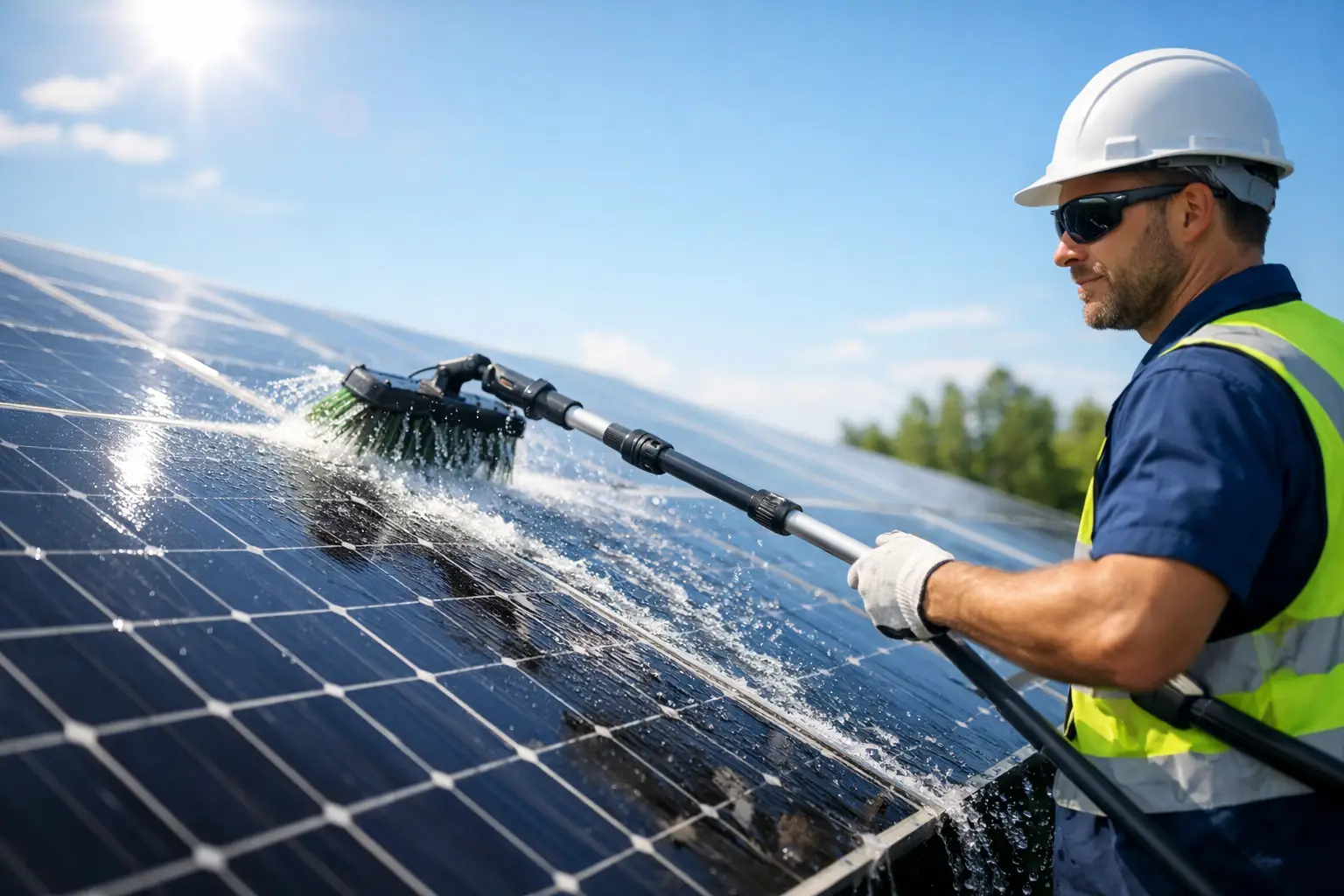
A solar array can look clean from the driveway and still be underperforming. Fine pollen, field dust, dried rain residue, and a thin film of airborne grime scatter light before it reaches the cells. On a system built to produce for decades, that loss is not cosmetic. It is a measurable reduction in the return on an asset you already paid for. Deionized water solar cleaning is designed to remove that soiling without leaving the mineral residue that ordinary water can deposit on photovoltaic glass.
For Southern Wisconsin solar owners, the difference matters. Spring pollen, agricultural dust, tree debris, bird droppings, and hard-water minerals each create a different maintenance problem. A proper cleaning method has to address the contamination while respecting the panel glass, coatings, frames, wiring, roof, and manufacturer guidance.
What Makes Deionized Water Different?
Deionized water, often called DI water, has had its dissolved mineral ions removed. That includes the calcium, magnesium, iron, and other minerals commonly found in tap water. Those minerals are the reason a sprinkler, hose rinse, or poorly filtered wash can dry into white spots and streaks.
Ordinary water does not just carry dirt away. As it evaporates, it can leave behind whatever was dissolved in it. On solar modules, repeated mineral deposits can interfere with light transmission and may contribute to stubborn surface residue. If hard-water spotting is baked on by sun and heat, removing it later can require more agitation than the panel should receive.
Pure DI water behaves differently. Because it contains very little dissolved material, it readily attracts and lifts dust and grime from the glass. When applied correctly, it dries spot-free. No detergent film, no rinse-water minerals, and no need to use a customer’s outdoor spigot.
That does not mean water alone solves every issue. Bird droppings, oily residue, lichen, and heavy agricultural buildup can adhere tightly to glass. Those conditions call for controlled mechanical cleaning with soft, manufacturer-appropriate brushes, not more aggressive chemicals or pressure.
How Deionized Water Solar Cleaning Protects Production
Solar panels need light, but soiling changes how light reaches the cells. A uniform layer of dust may reduce output across an array. More concentrated debris, such as bird droppings or leaf residue, can create uneven shading on individual cells or portions of a module.
That unevenness is where maintenance moves beyond appearance. Cells in a series string are interconnected. When one area is shaded or heavily soiled while adjacent cells are producing normally, electrical mismatch can create heat stress. Modern panels include bypass diodes intended to limit damage in shaded conditions, but they are not a substitute for keeping modules reasonably clear. Persistent localized soiling can contribute to hot spots, accelerated wear, and avoidable performance loss.
The production impact depends on the site. A low-pitch residential roof near mature pines may accumulate a different mix of debris than a farm array exposed to field dust. A commercial system near a busy road may collect fine particulates that are almost invisible until output is compared against a clean baseline. Rain helps with loose dust, but it does not reliably remove dried deposits, sticky pollen, or mineral residue.
Measured results are more useful than assumptions. Solar Alchemist documented a 16.7% production lift at the Wisconsin State Capitol after cleaning, while a Dane County homeowner saw a 22% daily recovery under identical weather conditions. Those results should not be treated as a promise for every array. They do show why checking actual production before and after service is more credible than calling cleaning a purely cosmetic service.
The Right Process Is More Than Pure Water
The quality of the water is only one part of the job. The cleaning process must be safe for the modules and the property beneath them. A panel is not a patio window, and a roof-mounted electrical system is not a place for improvised equipment.
A professional process begins with a visual assessment. The technician looks for soiling patterns, accessible panel edges, broken glass, exposed wiring concerns, damaged clamps, pest activity, and roof hazards. Cleaning cannot repair an existing equipment defect, but documenting visible conditions can help an owner identify issues that deserve further attention.
The panels are then cleaned with 100% deionized water and soft rotary brushes designed for photovoltaic glass. The brush action loosens bonded debris while the DI water carries it away. Water-fed equipment allows cleaning from an appropriate working position without dragging hoses across modules or relying on customer water and power hookups.
Pressure washing is not the answer. High pressure can force water where it does not belong, disturb seals, damage components, or create a safety problem around electrical equipment. Harsh household cleaners are also a poor choice. They can leave a film, react poorly with coatings, and create runoff concerns. Abrasive pads, metal-edged tools, and dry scraping create unnecessary risk of scratching the glass.
Timing matters too. Panels are often cooler and easier to clean under suitable conditions rather than at peak heat. A qualified technician also considers wind, roof access, electrical clearances, and the building’s specific fall-protection requirements. For commercial, agricultural, and government assets, insured and OSHA-conscious work practices are part of the service, not an add-on.
When Is Cleaning Worth Scheduling?
There is no universal calendar that fits every system. Some arrays need attention after pollen season and again after harvest dust. Others may perform well with a single annual service. The best schedule is based on exposure, production data, and the type of debris present.
Start by comparing current output with expected production for similar weather and seasonality. Your monitoring portal can be useful here, especially when it shows a sustained decline that cannot be explained by clouds, snow, shading changes, inverter faults, or utility interruptions. Visual evidence helps, but output data gives the decision financial context.
Cleaning is particularly worth evaluating when an array has visible pollen film, bird droppings, agricultural dust, roadside grime, nearby construction dust, or hard-water spotting from irrigation. It is also sensible before documenting an insurance claim, after a major debris event, or when an owner needs a clearer maintenance record for a warranty discussion.
For an array that is only lightly dusty and producing normally, immediate cleaning may not be the best use of money. Responsible maintenance means matching the service to the condition of the asset. The question is not whether every panel should be cleaned constantly. It is whether the current level of soiling is costing production or creating a preventable risk.
Documentation Has Value Beyond the Cleaning Day
A cleaning record creates a useful point of reference. It can show the service date, visible pre-existing conditions, the cleaning method used, and production observations before and after work when data is available. For larger portfolios, those records help facilities teams compare sites and plan maintenance budgets from evidence instead of guesswork.
Documentation can also matter when questions arise about warranty requirements, storm damage, vandalism, or performance changes. Manufacturers have different terms, and no cleaning company can guarantee a warranty outcome. Still, an organized record showing that the owner used a manufacturer-conscious, chemical-free method is stronger than having no maintenance history at all.
That same accountability is important on a residential roof. The person cleaning the panels should understand that a solar system is connected to your home, utility savings, and long-term property value. Owner-operated service means one accountable technician, one documented method, and no uncertainty about who was sent to the job.
Clean Glass Is a Maintenance Decision
Deionized water solar cleaning is not about making panels look better for a weekend. It is a controlled way to remove light-blocking contamination without replacing it with mineral deposits, detergent residue, or avoidable damage risk. When paired with soft brushes, proper access practices, and production tracking, it gives solar owners a practical way to protect output and preserve a clear maintenance history.
If your monitoring data has slipped, or your modules are showing the buildup that Wisconsin seasons tend to leave behind, treat that signal like you would any other asset-maintenance decision: inspect it, document it, and act on the evidence.