
Panel Cleaning Frequency: When Should You Clean?
By Marquis Mason ·
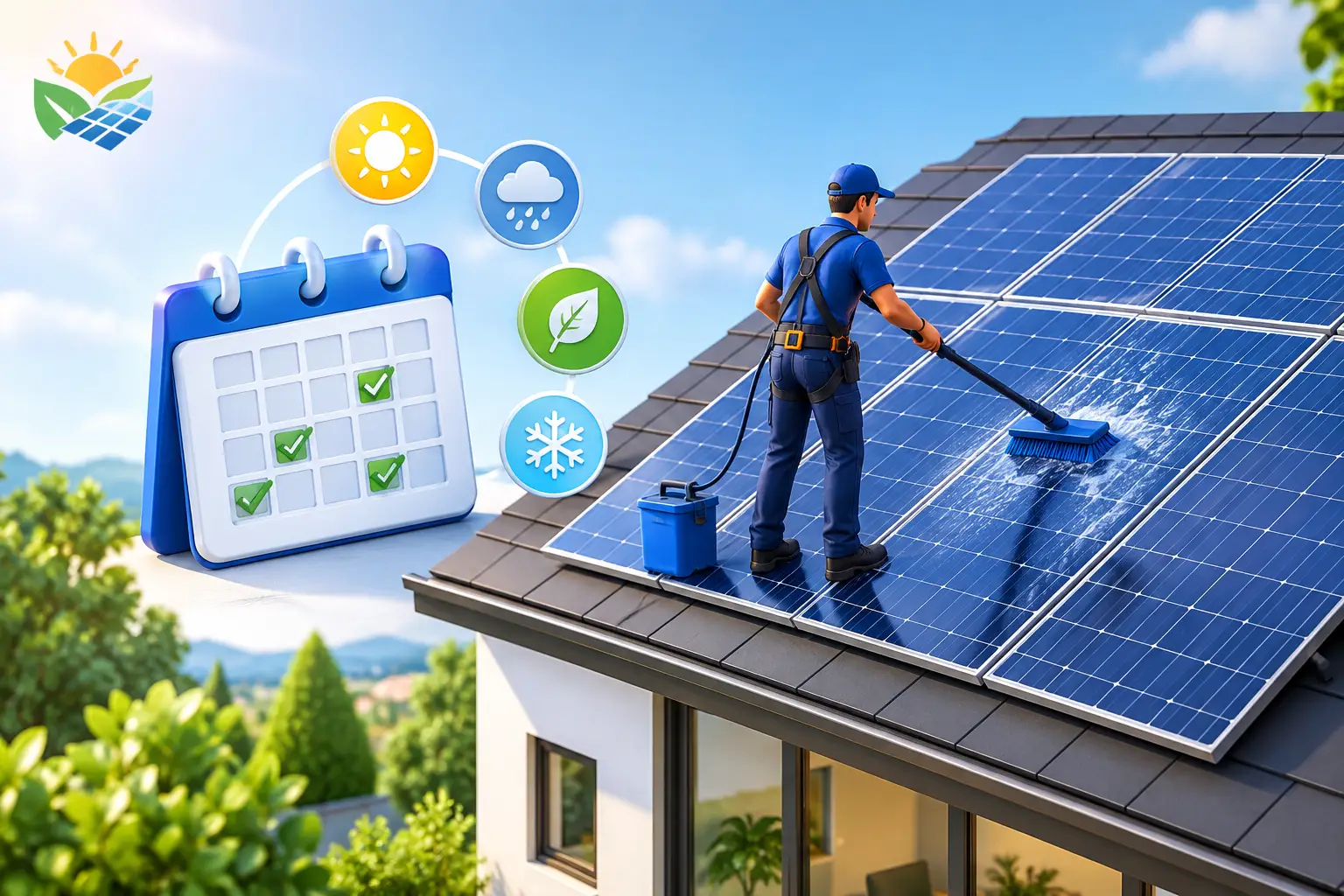
A solar array can look reasonably clean from the ground while losing meaningful production across its surface. Panel cleaning frequency should not be set by a calendar alone. It should be based on what reaches the glass, how quickly it accumulates, and whether production data shows the array is underperforming in comparable weather.
For many Southern Wisconsin owners, an annual professional cleaning is a sensible baseline. But a home near pine trees, a dairy operation, a warehouse loading area, or a concentrated bird roost may need attention twice a year or more. The right interval is the one that protects energy output and the panel surface without paying for cleaning that the site does not need.
Why a Fixed Cleaning Schedule Can Miss the Mark
Soiling is not one material. Spring pollen behaves differently from summer dust. Bird droppings can create dense, localized shading that ordinary rain will not remove. Agricultural dust may build gradually over a large array, while hard-water residue can remain after sprinkler overspray or runoff dries on the glass.
That distinction matters because photovoltaic cells are electrically connected. When part of a panel is shaded or heavily soiled, the affected area can limit the current produced by other cells in the circuit. In sustained cases, localized heat buildup can contribute to hot spots and place unnecessary stress on the panel. Cleaning is not about making glass look better from the driveway. It is about removing conditions that can suppress production and create avoidable surface risk.
Rain is helpful, but it is not a cleaning plan. A light rain can move loose dust into streaks, while mineral-rich water can leave deposits behind. Pollen, sticky organic residue, and bird droppings often remain after repeated rainfall.
The Best Panel Cleaning Frequency for Most Sites
For a typical residential rooftop in Southern Wisconsin with open exposure and no unusual contamination source, schedule a professional assessment or cleaning once per year. Late spring through early fall is often the most practical period because pollen, seed debris, construction dust, and dry-weather buildup have had time to accumulate.
Two cleanings per year are often justified when the array sits near trees, unpaved drives, active farming, industrial activity, bird nesting areas, or irrigation overspray. One cleaning after heavy spring pollen and another following the drier summer period can keep losses from compounding during the strongest production months.
Commercial, agricultural, government, and multi-site owners should set frequency by site conditions and documented results rather than applying one rule to every roof. A solar-covered livestock building and an office roof a few miles away can have entirely different cleaning needs. A pilot cleaning on representative sections, followed by production comparison, gives an owner a defensible basis for a recurring scope.
Situations That Call for Faster Action
Do not wait for the next scheduled service if you see persistent bird droppings, visible residue patterns, sprinkler spotting, ash, or a sudden production decline that cannot be explained by weather. These conditions deserve a closer look, particularly when they affect the same portion of the array day after day.
New nearby construction, gravel work, field activity, or tree work can also change a previously reliable schedule. Cleaning frequency should be reviewed whenever the site environment changes. What was sufficient last year may not be sufficient after a new dust source or bird activity develops.
Use Production Data Before Guesswork
The strongest signal is not appearance alone. It is a production pattern that falls behind expectations during similar weather conditions. Most owners have access to monitoring data that shows daily, monthly, or lifetime generation. Look for a gradual gap between expected and actual output, especially during clear periods when the system should be performing consistently.
A useful comparison is the same system under similar sun and temperature conditions before and after cleaning. It is not perfect science - cloud cover, ambient temperature, and seasonal sun angle all influence output - but controlled comparisons can reveal whether soiling was a meaningful factor.
Solar Alchemist documented a 16.7% production lift at the Wisconsin State Capitol after cleaning. A Dane County homeowner recorded a 22% daily recovery under identical weather conditions. Those results are evidence of what heavy soiling can cost at specific sites, not a promise that every array will recover the same percentage. The value of cleaning depends on the type and severity of buildup, panel angle, shading, weather, and the array's existing condition.
If monitoring has flagged a loss, document the dates, weather conditions, and readings before cleaning. Record the same information afterward. This gives homeowners a clearer return-on-service picture and gives organizations a practical record for future budgeting.
A Seasonal Approach That Fits Wisconsin Conditions
Wisconsin's seasons create recognizable cleaning triggers. Spring brings tree pollen, seed pods, and organic debris. Summer adds dry dust, bird activity, and residue from nearby field or construction activity. Fall can leave leaf fragments, needles, and organic matter trapped along panel edges. Winter snow generally requires a different operational decision than cleaning, but late-winter grit, road dust, and residue can become visible as snow cover recedes.
For many properties, the most useful cleaning window is after the heaviest pollen period and before the peak summer production season is over. That timing removes material when sunlight is abundant enough for recovered production to matter. For high-soiling sites, a second visit can be scheduled after harvest dust, summer drought, or another known local trigger.
There is no benefit in treating every light layer of dust as an emergency. Frequent unnecessary cleaning can cost more than the output it recovers. Conversely, waiting until buildup is obvious from the ground can leave weeks or months of lost generation unaddressed. Monitoring and site history are what keep the decision practical.
Why Method Matters as Much as Timing
Cleaning at the correct interval only helps if the panel surface is treated correctly. Abrasive pads, harsh chemicals, pressure washing, and untreated hard water can leave residue or create avoidable risk to glass, frames, seals, and electrical components. Manufacturer instructions should always guide the process.
A professional cleaning method should use purified water and soft, panel-safe contact tools. Solar Alchemist uses a mobile 100% deionized-water rig and soft rotary brushes to produce a chemical-free, spot-free finish without using customer water or power. This is especially relevant where hard-water spotting or large-array logistics make hose-and-squeegee cleaning a poor choice.
For roof-mounted systems, safe access is not optional. An insured, OSHA-certified technician using a manufacturer-approved process can clean the array while reducing risk to the roof, panels, and people below. That is a different standard from sending someone onto a roof with tap water and household cleaning supplies.
Keep Cleaning Records That Prove the Work
A dated service record should identify the array location, cleaning date, visible conditions, cleaning method, and before-and-after observations. For organizations, it can also support vendor files, internal asset records, insurance documentation, and warranty-related questions. For homeowners, it creates a useful history when reviewing production changes years later.
Photographs are helpful when buildup is localized or when residue, bird activity, or staining is present. They show why cleaning was recommended and establish the condition of the panels at the time of service. This is more useful than a vague note saying the array was cleaned.
The goal is not to create paperwork for its own sake. It is to turn a recurring expense into a documented decision based on the condition and performance of a valuable solar asset.
Set a Baseline, Then Let the Site Tell You More
Start with an annual cleaning if your array has ordinary exposure, then watch production and the panel surface through a full season. Move to twice-yearly service if pollen, dust, birds, or residue repeatedly reduce output or leave persistent deposits. For larger or higher-risk sites, establish a documented cleaning interval after comparing performance before and after service.
A well-timed cleaning does more than restore a clearer view of the panels. It gives you a cleaner production baseline, a record of responsible care, and better information for deciding what your solar asset needs next.