Solar Cleaning Versus Rainfall - Which Works?
By Marquis Mason ·
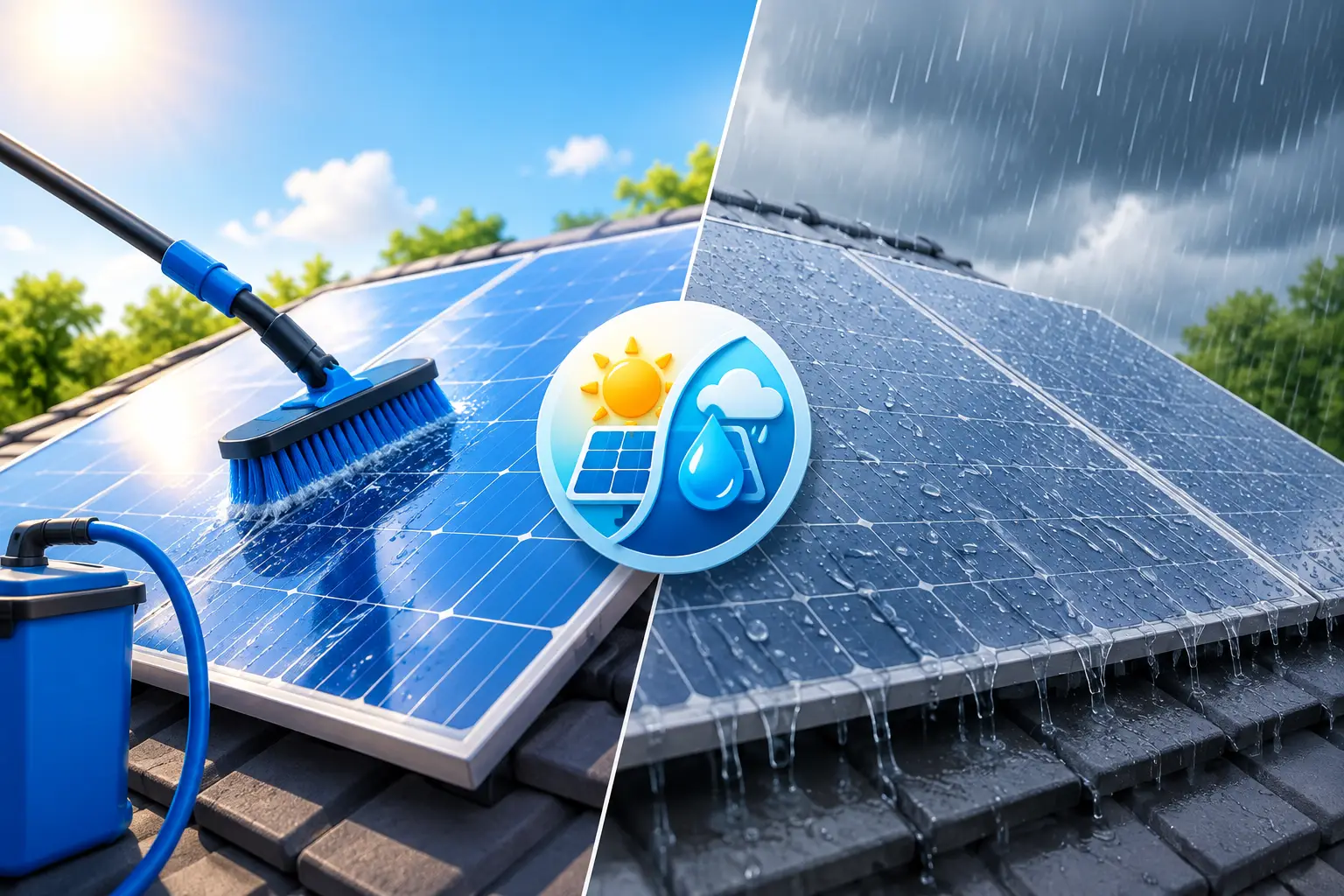
A hard spring rain may make a solar array look better from the ground. That does not mean it has restored the panel surface to a production-ready condition. In the real-world comparison of solar cleaning versus rainfall, rain can rinse away loose dust, but it often leaves behind the contaminants that matter most: sticky pollen, bonded grime, bird droppings, and mineral residue.
For a solar owner, the question is not whether panels look less dusty after a storm. The question is whether the surface is transmitting as much sunlight as it should - and whether the cleaning method protects the glass, frame, and long-term value of the array.
Solar Cleaning Versus Rainfall: The Physical Difference
Rain is not purified water. As it falls through the atmosphere and runs across a panel, it collects airborne particles. Once that water dries, dissolved minerals and fine debris can remain on the glass. In Southern Wisconsin, this is especially relevant after long dry spells, during heavy pollen season, near agricultural activity, or where trees and birds regularly affect the roof.
A light rain can turn a dusty layer into a thin film. A hard rain may move some loose material toward the lower edge of the panel, but it does not apply controlled mechanical agitation. That distinction matters. Dirt that has adhered to the glass needs more than water passing over it.
Professional solar cleaning combines pure water with soft, panel-safe contact. A 100% deionized-water system removes dissolved minerals from the cleaning process, while soft rotary brushes lift surface contamination without using harsh chemicals or high pressure. Because deionized water dries spot-free, it does not replace one source of residue with another.
Rainfall is passive and unpredictable. Proper cleaning is controlled: the water quality, brush pressure, coverage, and final visual inspection are all deliberate.
Why Some Soiling Survives the Rain
Not all contaminants behave the same way. Dry dust may rinse somewhat, especially on a steeply pitched array. But the deposits most likely to suppress output are often the ones rain handles poorly.
Pollen is a common example. It can become tacky when wet, combine with dust, and settle into a film that remains after the panel dries. Agricultural dust can contain fine particles that cling to the glass. Bird droppings are concentrated, opaque deposits that rain may soften around the edges without fully removing. Pine needles, leaves, and seed debris can also trap moisture and dirt at the bottom edge of modules.
Then there are hard-water deposits. If sprinkler overspray, roof runoff, or previous washing with untreated water has dried on the panels, mineral spotting may remain even after repeated storms. Those spots reduce light transmission and can become harder to address the longer they sit.
This is why a clean-looking array is not always a clean array. A homeowner viewing panels from the driveway may see a reflective surface. Production monitoring may tell a different story.
Rain Can Also Create Uneven Results
Rain does not clean every part of an array equally. Deposits often collect near frames, in lower corners, and along the bottom edge where water carries debris before drying. A rooftop may also have shaded areas, nearby trees, or exhaust sources that create uneven soiling patterns.
That unevenness matters because solar modules in a string work together. When one section is significantly obstructed, it can affect the output of more than the visibly dirty area. Persistent localized soiling may also contribute to hot spots, where a cell operates at a higher temperature because it is producing less current than surrounding cells. Cleaning cannot correct every electrical issue, but removing avoidable shading from surface contamination is a practical first step in protecting the asset.
When Rainfall May Be Enough
There are situations where rainfall does an acceptable job of reducing loose dirt. A newer array on a steep, unobstructed roof, in an area with frequent rain and little pollen, dust, or bird activity, may not show a meaningful difference immediately after a storm.
That is why blanket promises about a fixed production gain are not responsible. Soiling losses depend on panel tilt, weather, nearby land use, roof layout, season, and the type of contamination. The right decision should be based on conditions at the property and, when available, actual production data.
Still, “rain cleans panels” is not a cleaning plan. It is an assumption. If output is lower than expected during strong sun, if visible residue remains after rain, or if the array has gone through a full pollen season or a dusty dry period, inspection and measured cleaning are reasonable next steps.
The Case for Documented Professional Cleaning
The value of professional cleaning is not limited to a brighter panel surface. It is the combination of safe execution, a repeatable result, and evidence that the work was completed correctly.
For homeowners, that can mean comparing daily production before and after cleaning under similar weather conditions. Solar Alchemist documented a 22% daily production recovery for a Dane County homeowner under identical weather conditions. At the Wisconsin State Capitol, documented cleaning produced a 16.7% lift. Those results are not guarantees for every site. They are proof that soiling can create measurable losses that rainfall alone did not resolve.
For commercial, agricultural, and government solar owners, documentation has another purpose. A service record can support organized cleaning schedules, warranty discussions, and insurance claims when surface conditions or damage need to be documented. It also establishes a clear record of who performed the work, how it was done, and what was observed on the array.
A manufacturer-approved approach matters here. Pressure washing, abrasive tools, detergents not approved for photovoltaic modules, and untreated water can introduce unnecessary risk. Panels are durable, but their glass and protective surfaces are not a place for improvisation.
What a Proper Cleaning Visit Changes
A professional visit is designed to remove contamination without creating new problems. The technician should use equipment suited to photovoltaic glass, access the roof using insured and OSHA-conscious practices, and avoid walking or leaning on modules. The work should not depend on the customer providing a hose connection or power outlet.
With a mobile deionized-water rig, the cleaning water itself is part of the quality control. The goal is to leave the surface free of soil and free of the spots that untreated water can leave behind. Soft rotary brushes provide gentle, consistent contact where rainfall cannot.
The result is not simply “panels that look clean.” It is a documented baseline. Once an array has been properly cleaned, the owner can monitor production with greater confidence. If output remains below expectations, there is useful information to bring to a qualified solar service professional rather than guessing whether dirt is the cause.
How to Decide Whether Your Array Needs Cleaning
Start with what you can verify. Review production against prior periods with similar daylight and weather. Look for pollen film, bird droppings, streaking, mineral spots, debris along panel edges, or sprinkler overspray. Consider what has changed around the property: nearby farming activity, construction dust, tree growth, birds nesting nearby, or a prolonged dry spell.
If a storm has just passed, wait until the panels are fully dry before judging the result. Wet glass can hide residue. If the same deposits reappear once the surface dries, rainfall has not solved the problem.
The financial question is also straightforward. For an array worth $20,000 or more, even a modest, avoidable production loss deserves attention. Cleaning frequency should follow site conditions and documented performance, not a calendar rule copied from another climate or roof.
Rain is useful weather. It is not deionized water, a soft brush, a safety process, or a service record. When production matters, treat solar panel cleaning as disciplined asset care: verify the condition, use a panel-safe method, and measure what changes afterward.