
Solar Panel Cleaning: Protect Output and Glass
By Marquis Mason ·
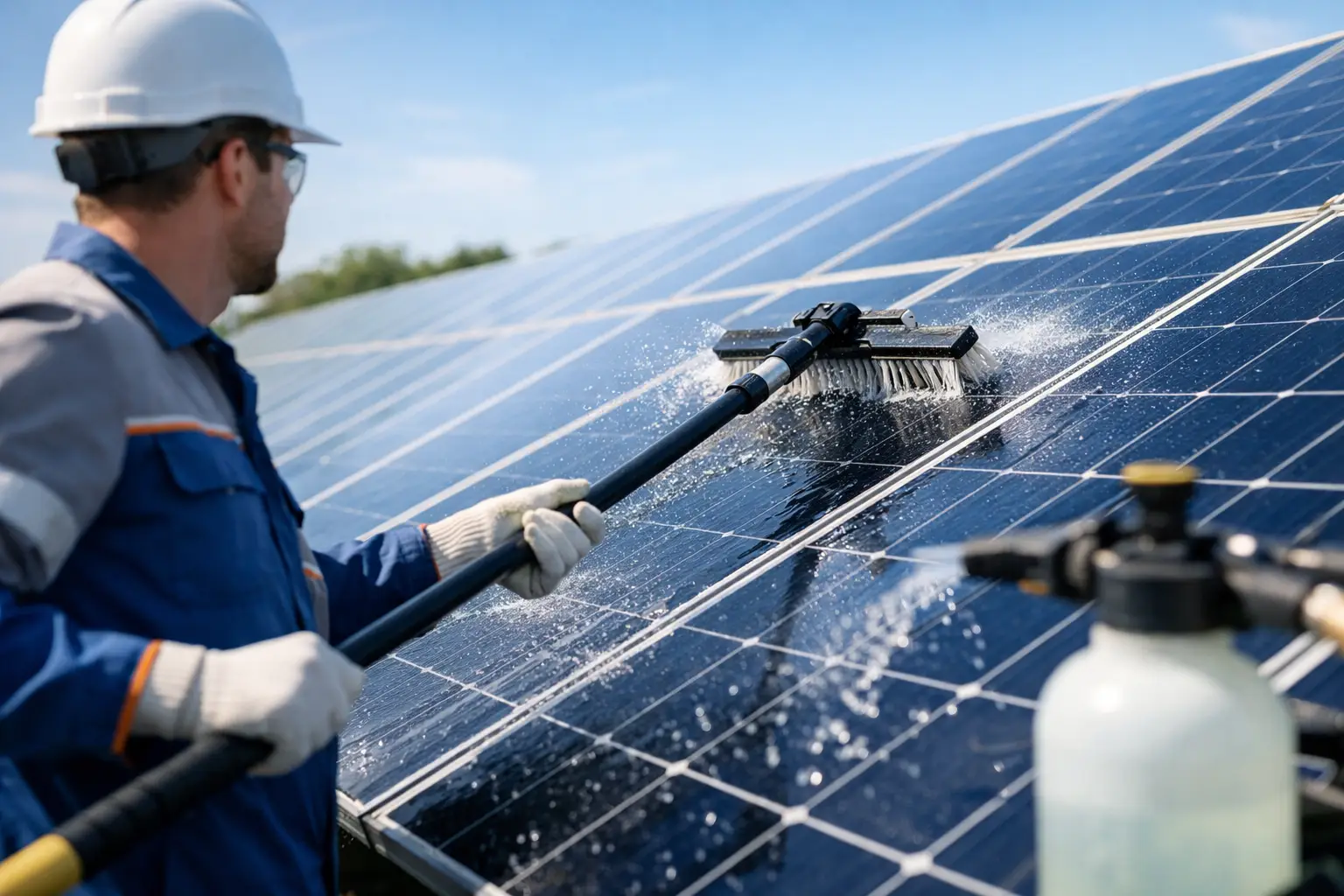
A solar array can look clean from the driveway and still be underperforming. In Southern Wisconsin, a thin film of pollen, field dust, road grit, or dried mineral residue can reduce the light reaching the cells. Solar panel cleaning is not about making glass look better. It is about protecting the production, warranty position, and long-term value of an asset that may have cost $20,000 or far more.
The question is not whether every system needs cleaning on the same calendar. It does not. The useful question is whether the material on your modules is costing enough production or creating enough risk to justify professional maintenance. That answer depends on the site, the season, the tilt of the array, and what is actually sitting on the glass.
What Dirt on Solar Panels Actually Costs
Solar modules generate electricity when light reaches their photovoltaic cells. Soiling blocks or scatters that light. A uniform layer of dust may create a modest, steady loss. Patchy contamination is more concerning because it shades individual areas of a module differently than the rest.
Bird droppings, leaves, pine needles, seed pods, and concentrated agricultural dust can create localized shading. Under operating conditions, those shaded cells can heat up relative to adjacent cells. This is commonly called a hot spot. Modern modules include bypass diodes to reduce risk, but they are not a license to ignore recurring shade or buildup. Repeated soiling at the same locations deserves attention before it becomes a performance or glass-damage issue.
Hard-water residue is another problem Wisconsin owners should take seriously. Spraying panels with hose water may remove loose dust while leaving minerals behind as the water dries. Those deposits can bond to the glass and become harder to remove over time. Abrasive scrubbing, harsh chemicals, or an improperly adjusted pressure washer can then create a worse problem than the original dirt.
Production losses vary widely, which is why broad claims about a universal percentage are not useful. At the Wisconsin State Capitol, documented professional cleaning produced a 16.7% production lift. For a Dane County homeowner, the observed daily recovery was 22% under identical weather conditions. Those results are proof that meaningful losses can occur, not a promise that every roof will respond the same way.
When Solar Panel Cleaning Makes Financial Sense
A site near row crops, gravel roads, construction activity, rail corridors, or high-traffic areas is likely to accumulate more dust than a sheltered suburban roof. Farms can see fine organic dust and chaff. Homes beneath pine trees can collect needles, sap, and pollen. Commercial roofs may gather airborne soot, HVAC exhaust residue, and debris around drainage paths.
Tilt matters too. Steeper modules shed more rainfall and loose debris than low-slope arrays, but rain is not a complete cleaning method. Rainwater can redistribute grime, dry into mineral spotting, and leave heavy deposits in place. A low-angle rooftop system often needs closer attention because contaminants stay put longer.
Instead of guessing from the ground, check for practical signals. Compare current output with the system's prior production during similar weather and daylight periods. Review your monitoring portal for persistent underperformance, especially if it is not explained by snow cover, equipment alerts, or seasonal daylight changes. Look for visibly uneven staining, bird activity, leaf accumulation at the lower edge, or runoff marks that remain after rain.
For commercial, agricultural, government, and multi-site owners, the calculation includes more than kilowatt-hours. A documented maintenance record can support a disciplined asset-management program. It gives facility teams a clear record of what was observed, what was cleaned, and when the work was performed. That documentation may be useful when addressing warranty questions, insurance claims, operational reporting, or vendor compliance requirements.
Why DIY Cleaning Can Create More Risk Than Savings
The temptation is understandable: panels are glass, a hose is nearby, and the job appears simple. But a solar module is not a window. It is an electrical component installed at height, often on a steep or fragile roof surface.
The immediate risk is personal safety. Wet roofs, extension ladders, skylights, and overhead electrical equipment make casual roof work a poor trade for a few dollars saved. There is also equipment risk. Cold water on a hot panel can create thermal stress. Aggressive brushes can scratch coatings. Detergents may leave films that attract more dirt or conflict with manufacturer guidance. High-pressure water can force moisture where it does not belong, particularly around aging seals, junction boxes, and roof penetrations.
Using softened or tap water is not automatically safe either. Water that looks clear can still contain dissolved minerals. Once it evaporates, those minerals remain on the surface. That is why a professional process should address both safe agitation and water quality, not simply whether the panel looks wet when the crew leaves.
The Manufacturer-Safe Method for Solar Panel Cleaning
A responsible cleaning process begins with the array, not the equipment. The technician should assess access, roof conditions, panel type, visible contamination, and any obvious safety concerns before work starts. The goal is to remove soiling without adding mechanical, chemical, or thermal stress.
Solar Alchemist uses a custom mobile 100% deionized-water rig with soft rotary brushes. Deionized water has had dissolved mineral ions removed, so it can rinse clean without leaving the spotting associated with ordinary hose water. The soft-brush approach lifts grime while avoiding the harsh scraping and pressure that can damage module surfaces. No customer water or power hookup is required, which keeps the job contained and predictable.
Chemical-free cleaning also matters. The right cleaning method should not leave residues on the glass or introduce runoff concerns around a home, farm, or commercial facility. If a deposit is unusually stubborn, the response should still be guided by module manufacturer recommendations and the condition of the glass, rather than escalating to a stronger household cleaner.
After cleaning, the useful deliverable is more than a clean-looking array. It is a documented service record and a practical basis for comparing subsequent production. For owners with monitoring data, watching output after cleaning can help separate a genuine soiling issue from inverter faults, seasonal shading, snow, or other causes of reduced generation.
How Often Should Wisconsin Panels Be Cleaned?
There is no responsible one-size-fits-all interval. Some residential systems may benefit from an annual inspection and cleaning, particularly after spring pollen or a dusty summer. Other sites may need service twice a year because of farming activity, tree cover, birds, low module tilt, or nearby construction. A clean, steeply tilted array in an open location may need less frequent intervention.
Commercial and agricultural arrays benefit from a planned schedule tied to their operating conditions and reporting needs. Cleaning before the highest-production months can be sensible when buildup is known to be present. At the same time, a schedule should remain flexible. A dry, dusty stretch, a nearby harvest, or prolonged bird activity can justify moving sooner than the calendar says.
For any system, start with evidence. Review production trends, inspect safely from the ground where possible, and compare the expected recovery with the service cost. A professional provider should be able to explain the process clearly, provide appropriate insurance and safety documentation when needed, and quote the work without pressure.
Your solar array was installed to produce for decades, not to become a maintenance mystery. Treat visible buildup and unexplained production loss as a reason to investigate early. The right cleaning decision is the one supported by site conditions, safe methods, and measurable results.