Solar Panel Hot Spots: The Bird Dropping Problem
By Marquis Mason ·
The most damaging thing on your roof might be one bird dropping. Not a film of dust. Not a season of pollen. A single opaque dropping, parked over one cell, doing quiet damage every sunny day until it is removed.
This is not cleaning-industry folklore. LONGi, one of the largest panel manufacturers in the world, writes it into its installation manual: accumulated contaminants — dust, industrial wastewater, bird droppings — reduce power output and can cause hot spots. (That quote is from LONGi's manual, collected in the International Solar Cleaning Association's compilation of manufacturer documents.) The global soiling review in Joule says the same thing in research language: non-uniform soiling and partial shading can lead to the formation of hot spots.
How a hot spot actually forms
Cells in a panel are wired in series. The string produces what its weakest cell allows. When one cell is shaded hard — by a dropping, a leaf wad, a baked-on clump of dirt — it stops generating and starts consuming. Current from the rest of the string gets forced through it in reverse, and the energy comes out as heat instead of electricity.
Panels have bypass diodes to limit this. A diode routes current around a shaded section so the whole panel doesn't go down. That protection is real but partial: the shaded cell still runs hot inside its section, day after day, and heat is what ages materials. Over time, chronic hot spots are associated with discolored backsheets, stressed solder joints, and cells that fail early. The dropping is cheap to remove. The cell is not.
This is also why uniform dust and spot soiling are different problems. A thin even film costs you a few percent of production — annoying, measurable, covered in how to calculate soiling losses. A hard shadow on one cell costs production and cooks hardware. It deserves a faster response.
What to look for
- Droppings under rooflines, vents, antennas, and tree branches — anywhere birds sit above the array.
- Leaf and needle clumps in panel corners after storms, especially in fall.
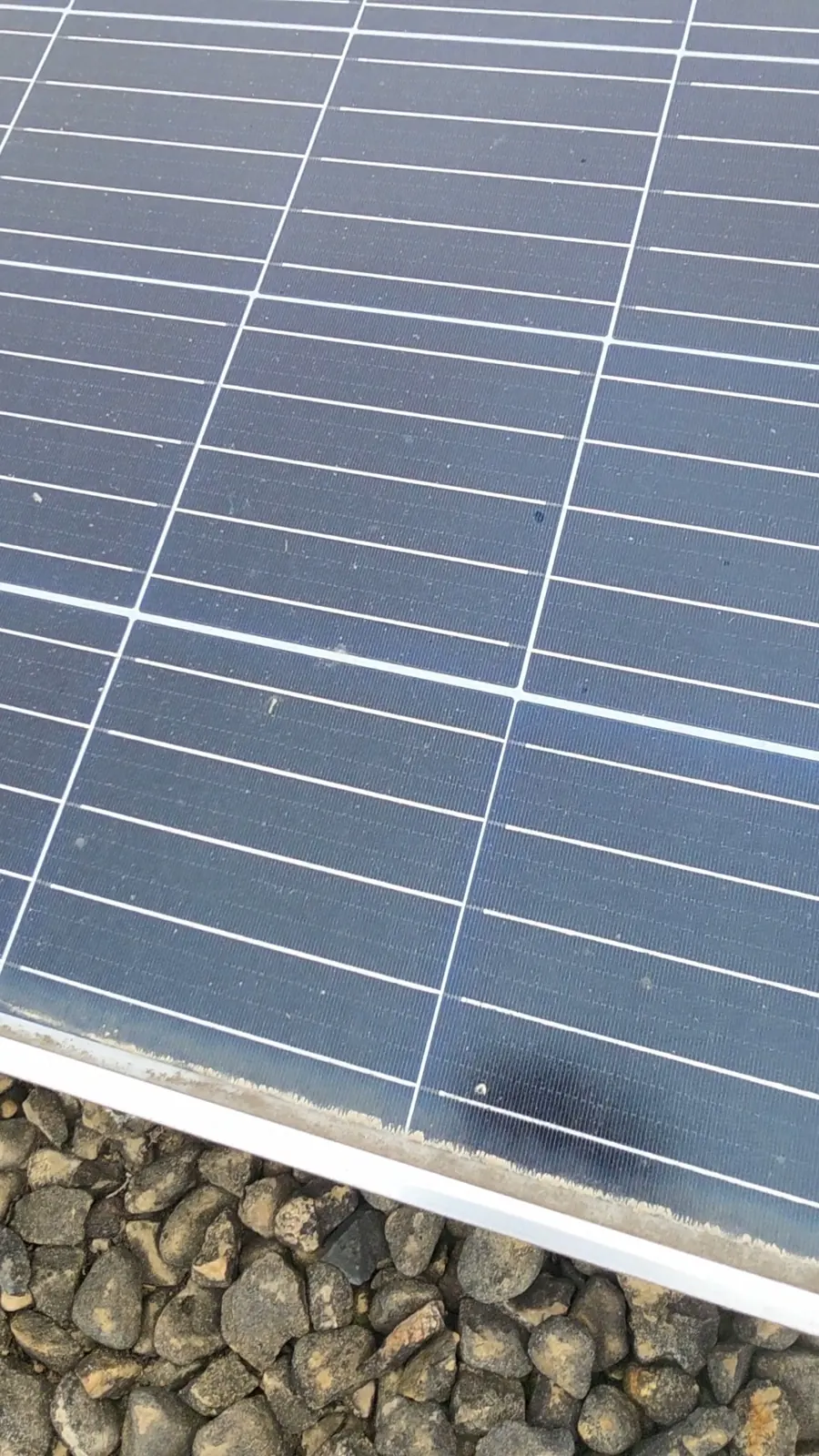
- The mud ridge along the bottom frame edge, where rinsed dirt collects and bakes. On low-tilt arrays this ridge can shade the bottom cell row permanently.
- One panel visibly dirtier than its neighbors, or one string underproducing in your monitoring app while the others hold.
You can spot most of this from the ground with binoculars. What you should not do is get on the roof and scrub at it yourself with whatever is in the garage — several manufacturers void warranty coverage for damage from improper cleaning, and dry-scraping grit across glass is exactly how panels get micro-scratches. The rules are laid out in will cleaning void your warranty.
What cleaning does — and what it doesn't
Cleaning removes the cause. Droppings, film, ridges, and debris come off, the cell goes back to generating, and the heating cycle stops. My method: 100% deionized water and a motorized rotary brush — with a biodegradable, panel-specific soap when heavy soiling needs it. No harsh chemicals, no abrasives, warranty-safe. The why behind the water is in the deionized water post. Every cleaning includes a visual inspection, and I flag anything that looks off: discoloration, cracked glass, damaged frames.
What cleaning does not do is repair damage already done. A failed bypass diode, a cracked cell, a dead panel — that is electrical and warranty work, and I refer it out to the people licensed for it. If I clean an array and find a panel that looks heat-damaged, you get a photo and a straight explanation, not a sales pitch for work I don't perform.
The takeaway
Check your array after bird season and after fall storms. If you see droppings sitting on cells, don't wait for rain to fix it — rain doesn't, which is its own topic in does rain clean solar panels. A single cleaning visit costs less than the panel it might save. Text me at (608) 571-4173 and I'll look at your roof by satellite first, free, and tell you what I can see from above.