
What Solar Soiling Costs Wisconsin Solar Owners
By Marquis Mason ·
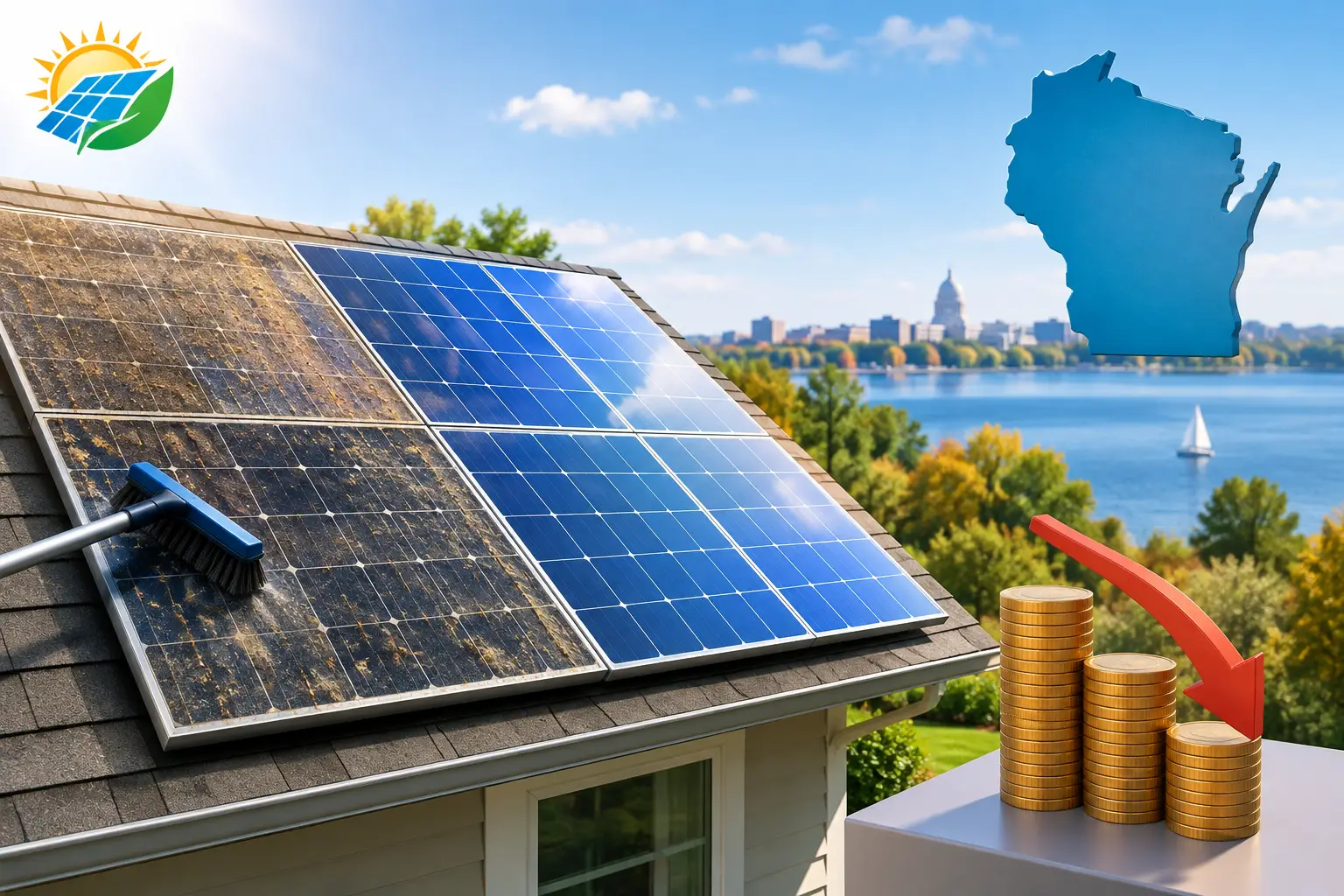
A solar array can look acceptable from the ground while solar soiling is quietly reducing its output. A thin, uneven film of pollen, dust, pollution residue, or dried rain can block light before it reaches the cells. Add bird droppings, pine debris, or mineral deposits, and the loss is no longer a cosmetic concern. It becomes a performance and asset-protection question.
For a solar owner, the practical issue is not whether panels ever get dirty. They do. The question is whether the buildup is enough to justify professional cleaning, and whether the cleaning method protects the glass, coatings, wiring, roof, and warranty record in the process.
What solar soiling actually is
Solar soiling is the accumulation of material on the light-receiving surface of photovoltaic panels. Some contaminants are loose and temporary. Others bond to the glass after repeated dew, rain, sun, and drying cycles. In Southern Wisconsin, the mix commonly includes spring pollen, road and construction dust, agricultural dust, leaf fragments, pine needles, bird droppings, and hard-water minerals.
Not all soiling behaves the same way. Fine dust may spread across much of an array and cause a broad production reduction. Bird droppings tend to create dense, concentrated shading. Pollen can form a sticky film when it combines with moisture. Mineral residue is different again: if untreated water dries on hot glass, it can leave spots that continue to block light and may contribute to surface damage over time.
Rain helps in some conditions, but it is not a cleaning program. A light rain can redistribute grime, while rainwater carrying dust or minerals can dry into another layer of residue. Panels installed at a low tilt are especially likely to retain material near their lower edges.
Why a small amount of dirt can have a real cost
A photovoltaic panel does not need to be fully covered to lose meaningful production. Light needs a clear path to the cells, and shading is rarely evenly distributed. When contamination blocks a portion of a panel, the affected cells can limit the output of the connected section.
This is why the most visible debris is not always the only concern. A panel with one obvious bird dropping may have several other areas covered by a nearly invisible pollen-and-dust film. The array can be producing, just not at the level the owner paid for.
The financial effect depends on system size, utility rates, weather, panel orientation, and how long the buildup remains. It also depends on whether the system is already operating close to expected output. A 3% loss and a 15% loss deserve different responses, but neither should be guessed at from a driveway.
Documented local results show why measurement matters. Solar Alchemist recorded a 16.7% production lift after cleaning panels at the Wisconsin State Capitol. A Dane County homeowner saw a 22% daily recovery under identical weather conditions. Those results are not a promise that every array will respond the same way. They are proof that significant soiling losses can occur, including in a climate where owners may assume rainfall handles the job.
The risk is not limited to lost kilowatt-hours
Production loss is the easiest part of solar soiling to understand because it appears in monitoring data and utility savings. The less obvious concern is uneven heating.
When a dense contaminant shades part of a panel, that area can operate differently than the surrounding cells. Under the wrong conditions, localized heat can build up around the shaded area. These hot spots can put additional stress on cells and materials. Bird droppings are a frequent concern because they are opaque, adhesive, and often remain in place through multiple rain events.
Hard-water deposits present a separate risk. The minerals left behind after tap water dries can become stubborn spots. Aggressive scrubbing, harsh chemicals, pressure washing, or abrasive tools can turn a cleaning attempt into a glass, frame, seal, or coating problem. A panel is durable equipment, but its surface should still be treated as a precision component.
For owners with manufacturer warranties or insurance requirements, documentation also matters. If an array has a production issue or physical damage, a clear service record helps show that cleaning was performed with an appropriate process rather than improvised methods. It does not guarantee a warranty outcome, but it creates useful evidence when questions arise.
How to tell whether your array needs cleaning
Start with production data, not just appearance. Compare current output with prior periods that had similar weather and daylight. A single cloudy week does not prove soiling. A persistent gap during comparable conditions deserves a closer look.
Then inspect from a safe location. Look for patchy discoloration, yellow-green pollen film, debris collecting along the bottom edge, visible droppings, residue patterns after rain, or a dull haze that does not rinse away. Do not climb onto a roof or walk on panels to investigate. Aside from the personal safety risk, foot traffic and improper access can damage equipment or surrounding roof materials.
A professional assessment is particularly worthwhile when production has dropped without an obvious weather explanation, panels sit near agriculture or busy roads, trees shed pollen or needles nearby, birds routinely perch above the array, or mineral spotting is visible. Commercial, farm, government, and multi-site owners should also consider the value of a repeatable inspection and cleaning record rather than making a decision only when loss becomes obvious.
There is no universal cleaning interval. Some arrays may need attention after a high-pollen season or drought. Others may remain relatively clear for a longer period. The right schedule follows site conditions, visible buildup, and measured production trends.
Why the cleaning method matters as much as the cleaning
The goal is to remove contamination without leaving a new problem behind. That is why water quality, brush selection, and pressure control matter.
A manufacturer-conscious process uses purified, 100% deionized water and soft rotary brushes designed for photovoltaic glass. Deionized water lifts and carries away grime without depositing the minerals found in ordinary tap water. When the surface dries, it leaves a spot-free finish rather than a film of dissolved solids.
Chemical-free cleaning is often the sensible approach because it avoids residues that can attract more dust or interact poorly with panel surfaces. High-pressure washing is also a poor shortcut. It may force water where it does not belong, damage seals, or create unnecessary risk around electrical equipment. The fastest-looking method is not always the safest method for a valuable rooftop asset.
Access and accountability matter too. For elevated or complex arrays, owners should use an insured, OSHA-trained provider who can explain the process, provide appropriate business documentation, and document the completed work. A clear before-and-after record is more useful than a vague assurance that the panels were washed.
Turning cleaning into a measurable decision
Cleaning should be judged the same way owners judge other solar expenses: by evidence. Before service, record the system's production data and photograph notable buildup where safely possible. After cleaning, compare output during similar weather conditions. One day is useful, but several comparable days provide a stronger picture.
For larger sites, track results by array section when monitoring allows it. This can reveal whether one roof plane, building side, or location is exposed to more dust, pollen, or bird activity than another. Over time, the data helps establish a cleaning frequency based on actual conditions instead of a calendar guess.
A written service record should identify the date, array location, cleaning method, observed contamination, and any visible concerns that warrant follow-up. For organizations managing multiple properties, that record supports budgeting, vendor accountability, and informed decisions about future cleaning cycles.
A practical standard for Wisconsin solar owners
The right response to solar soiling is neither panic nor neglect. A light layer of seasonal dust may not justify immediate service. Heavy pollen film, repeated bird droppings, mineral spotting, or an unexplained production decline should not be left to chance.
Treat the array like the income-producing equipment it is. Check the data, look for site-specific buildup, and use a cleaning process that leaves no chemical residue or mineral spots behind. When performance is measured before and after the work, panel cleaning stops being a cosmetic expense and becomes a documented decision to protect output and the solar asset you rely on.