When a Solar Cleaning Service Pays for Itself
By Marquis Mason ·
A solar array can look clean from the driveway and still be underperforming. Pollen settles into a thin film, agricultural dust builds at the lower edge, and bird droppings create dense, localized shade. A professional solar cleaning service addresses those losses with the same discipline applied to any other high-value asset: identify the condition, use an approved maintenance method, and document the work.
For Southern Wisconsin solar owners, cleaning is not a cosmetic errand. It is a practical decision about production, glass condition, warranty support, and whether the array is being maintained as carefully as the investment deserves.
What Soiling Does to Solar Production
Solar panels produce electricity when sunlight reaches the photovoltaic cells beneath the glass. Anything that blocks that light reduces available output. Some soiling is evenly spread across the surface, such as pollen or road dust. Other contamination is concentrated, including bird droppings, leaf residue, or material that collects along the frame.
The concentrated material is often more concerning. A small shaded area can force affected cells to operate differently than the rest of the panel. Under certain conditions, persistent partial shading contributes to hot spots, where a cell runs hotter than surrounding cells. Heat is not automatically evidence of panel damage, but it is a condition worth preventing when the cause is removable surface contamination.
Water quality matters, too. Hard water can leave mineral deposits behind after it evaporates. Over time, those deposits may bond to the glass and become harder to remove. Scrubbing with the wrong brush, using household chemicals, or rinsing with untreated water can turn a simple maintenance task into a glass, coating, or warranty concern.
That is why the question is not simply, “Can I wash my panels?” Most owners can. The better question is whether a given method is appropriate for the panel manufacturer’s guidance, the roof, the water available, and the value of the system.
When a Solar Cleaning Service Makes Financial Sense
Cleaning does not produce the same return on every array. A low-pitch residential roof in an open area may receive enough rain to remain reasonably clean for long periods. A system near pines, crop fields, gravel roads, construction activity, or concentrated bird activity may soil much faster.
Production data gives the best starting point. If an array’s output is lower than expected for the season, compare it with prior periods under similar weather conditions. Check for inverter alerts, snow cover, shading from new tree growth, and utility or monitoring issues before assuming dirt is the sole cause. Cleaning should be a measured maintenance decision, not a guess.
Still, real-world results can be material. Solar Alchemist documented a 16.7% production lift after cleaning panels at the Wisconsin State Capitol. A Dane County homeowner recorded a 22% daily recovery under identical weather conditions. Those results are proof that soiling can suppress production substantially, not a promise that every system will respond by the same amount.
The financial case depends on the system’s size, electric rate, current production loss, and how long soiling has been present. For a large commercial roof, even a modest percentage recovery can have meaningful value. For a homeowner, a cleaning may be justified by a combination of restored generation, safer maintenance, and a documented record for a system that cost $20,000 or more.
Why Method Matters More Than a Rinse
Manufacturer guidance generally favors gentle cleaning with appropriate water and non-abrasive tools. The reason is straightforward: solar panels are durable, but they are not designed for pressure washing, harsh chemicals, metal-edged tools, or repeated abrasion.
A professional process should start with access and safety. Roof pitch, panel layout, fall exposure, weather, and electrical clearances all affect how work should be performed. For commercial, agricultural, and government sites, that also means confirming vendor insurance, OSHA-aware practices, and site-specific requirements before work begins.
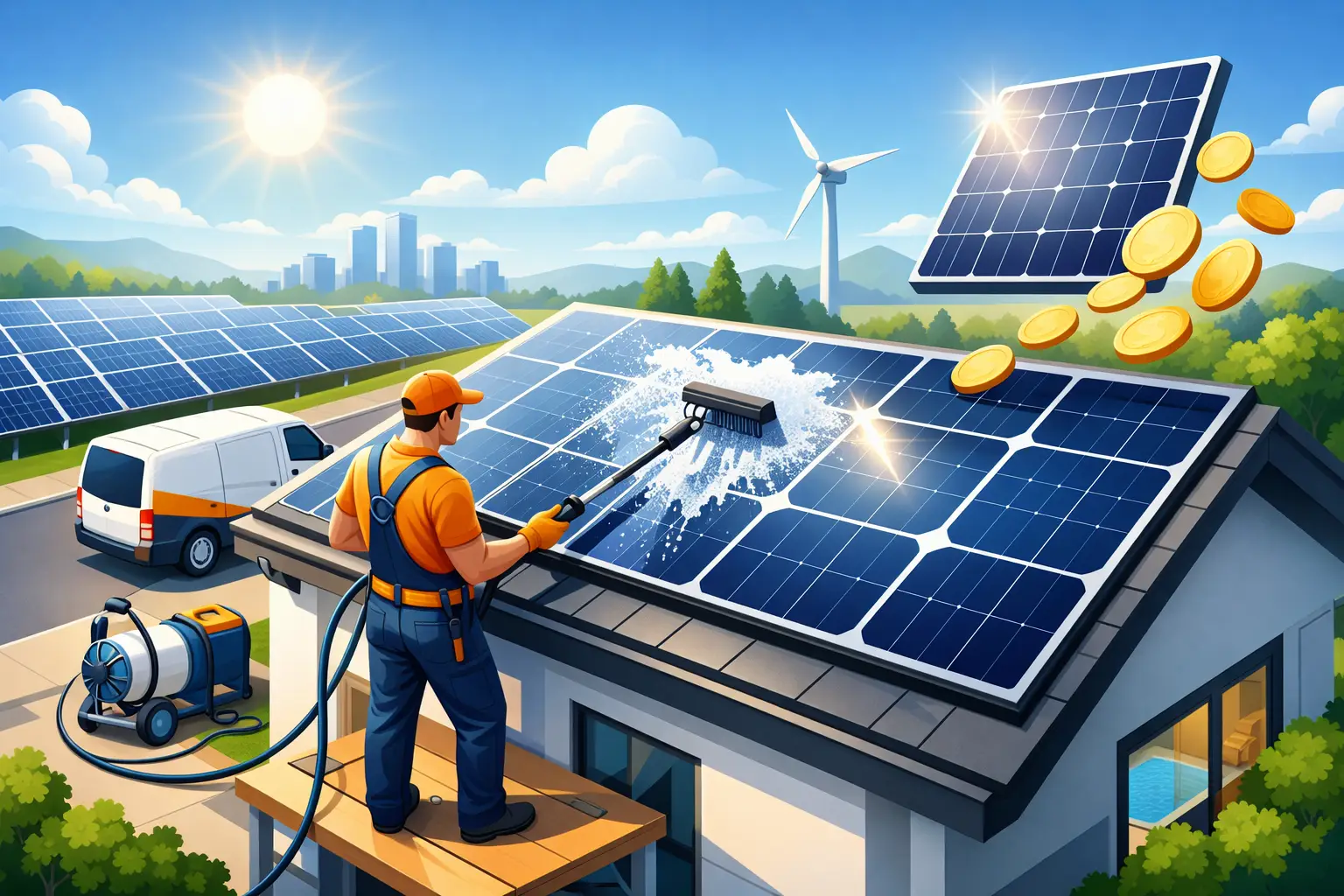
The cleaning method should remove contamination without leaving a new problem behind. Solar Alchemist uses a custom mobile 100% deionized-water rig and soft rotary brushes. Deionized water is stripped of the minerals that create drying spots, so panels can air-dry without a hard-water film. No customer water hookup, power connection, or chemical runoff is required.
That setup is especially useful where the water source is hard, access is limited, or a facility manager needs minimal disruption. It also removes a common DIY compromise: rinsing clean panels with water that leaves mineral residue as it dries.
Documentation Is Part of the Service
A clean array is useful. A documented maintenance record is more useful.
Panel manufacturers, insurers, lenders, facility managers, and asset owners may all have a reason to ask how a system has been maintained. A clear service record establishes the date of cleaning, the condition observed, the method used, and who performed the work. If production improves after service, monitoring data can add another useful layer of evidence.
Documentation does not guarantee a warranty claim or an insurance outcome. Those decisions rest with the manufacturer or carrier and depend on the policy or warranty language. But a maintenance record puts the owner in a far stronger position than an undocumented history of “we rinsed them once.”
For organizations managing multiple sites, records also make planning easier. A facilities team can see which arrays repeatedly collect agricultural dust, which roofs have recurring bird pressure, and where seasonal service is likely to provide the most value. Cleaning intervals can then be based on observed site conditions rather than a generic calendar reminder.
How Often Should Panels Be Cleaned?
There is no responsible one-size-fits-all answer. In Southern Wisconsin, rain may clear loose dust but not sticky pollen, hardened droppings, sap residue, or mineral spotting. Snow is a separate seasonal factor, and cleaning snow-covered panels is not the same as addressing accumulated soiling during the production season.
A good starting point is to inspect production and visible panel condition after high-pollen periods, nearby construction, harvest activity, prolonged dry weather, or a noticeable increase in bird activity. Arrays near farms and unpaved roads often need more attention than suburban systems with clear exposure and regular rainfall.
Annual cleaning can be appropriate for some owners. Others may benefit from a spring service followed by a late-summer or post-harvest evaluation. Commercial and public assets may choose a defined maintenance schedule because predictable documentation and budgeting matter as much as the cleaning itself.
The right interval comes from the evidence at the site: production trends, contamination type, local exposure, roof access, and the cost of lost generation.
What to Expect From a Professional Visit
The service process should be clear before anyone arrives. A qualified provider should be able to explain how pricing is determined, whether a site visit is needed, what equipment will be used, and what documentation the owner will receive.
For straightforward residential arrays, satellite imagery and panel count can often support a transparent quote without a mandatory site visit or a high-pressure sales call. More complex properties - including large commercial roofs, farms, government facilities, and multi-site portfolios - usually need a custom written bid that accounts for access, safety requirements, scheduling, and site procedures.
Ask direct questions. Is the technician insured? Is the work subcontracted? Will pressure washing or chemicals be used? Does the provider bring treated water? Can they meet vendor requirements such as certificates of insurance, W-9 documentation, and Net-30 invoicing when needed?
Those details separate a panel-cleaning task from professional solar asset maintenance. Founder-led service also matters. When the person quoting the work is the person responsible for performing it, there is less room for assumptions to get lost between a sales team, subcontractor, and crew.
Start With Your Production Data
Before scheduling any maintenance, pull up the monitoring app and look at recent output. Compare similar sunny days, account for seasonal sun angle and temperature, and note any alerts. Then look at the panels from a safe vantage point. A gray film, debris line at the bottom frame, or visible droppings may explain part of the gap.
If the array is due for cleaning, treat the appointment as an opportunity to establish a baseline. Record production before service, retain the maintenance documentation, and watch output afterward under comparable conditions. That creates a practical record for future decisions rather than relying on appearance alone.
Your panels do not need to look neglected to deserve attention. They need to be producing, protected, and maintained with evidence that matches the value of the asset on your roof.