
Will Cleaning Void Solar Warranties? The Facts
By Marquis Mason ·
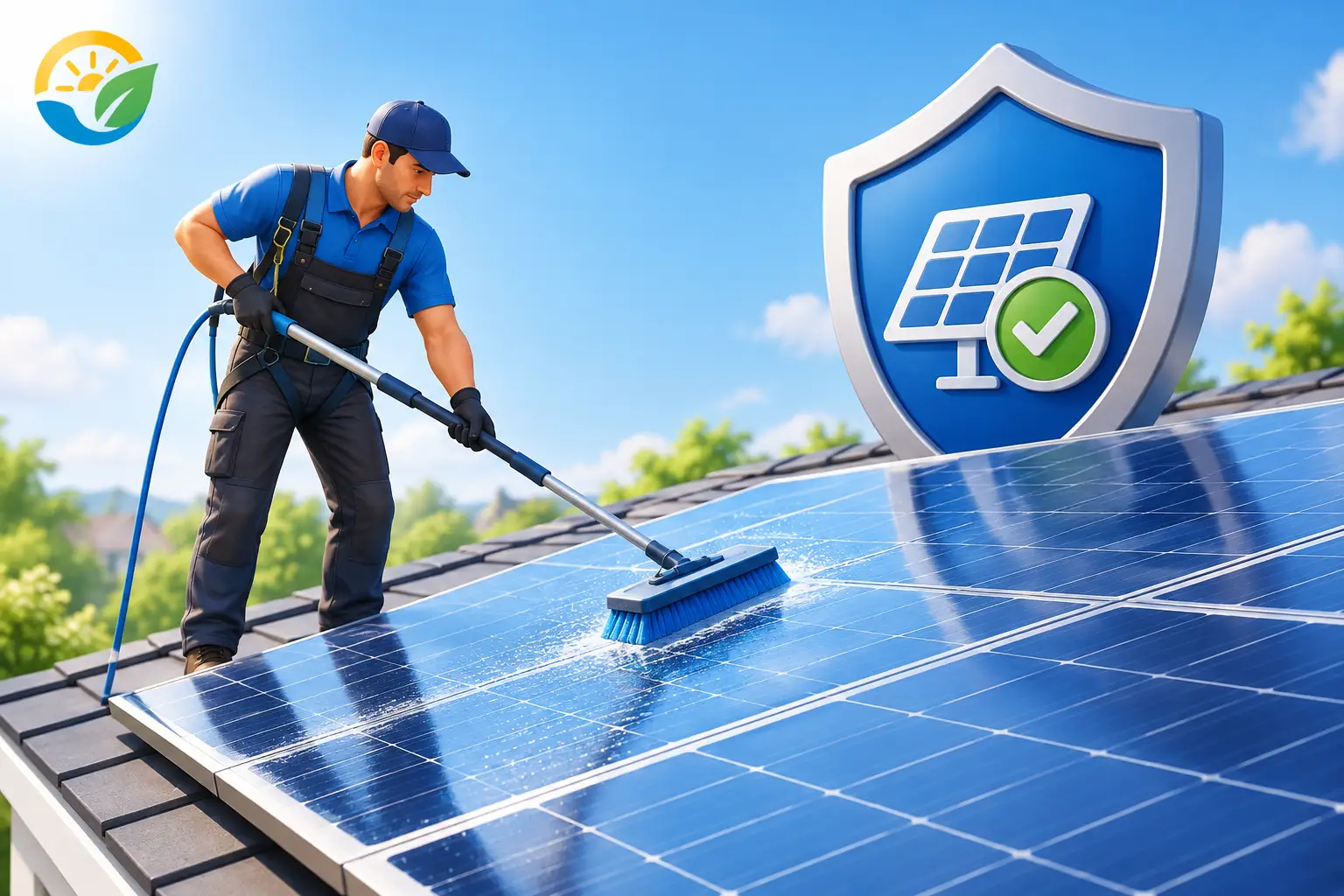
A dirty solar array can lose production while pollen, agricultural dust, bird droppings, and mineral residue sit on the glass. Yet many owners hesitate to address it because they ask: will cleaning void solar warranties? Usually, no. Proper cleaning is not a warranty violation. The risk comes from the wrong method, the wrong equipment, or damage caused while trying to remove the soil.
That distinction matters for a solar asset worth tens of thousands of dollars. Cleaning should protect production and preserve the panel condition your warranty expects, not create scratched glass, damaged seals, or an undocumented question mark if a claim is needed later.
Will Cleaning Void Solar Warranties?
Cleaning itself generally does not void a solar panel warranty. In fact, panel manufacturers commonly provide cleaning guidance because they expect modules to accumulate dirt and require reasonable care over their service life.
What can create warranty trouble is damage caused by improper cleaning. Warranty language varies by manufacturer and model, so the controlling document is always the written warranty and care instructions for your specific panels. But the same problem areas appear repeatedly: abrasive tools, harsh chemicals, concentrated pressure, hard-water spotting, and work that damages the glass, frame, wiring, or mounting hardware.
A manufacturer is not likely to deny a legitimate defect claim simply because the panels were cleaned responsibly. They may deny coverage for damage that can be traced to an unsafe cleaning method. Put plainly: cleaning is not the issue. Evidence of cleaning-related damage is.
The Methods Most Likely to Cause Problems
Solar glass is durable, but it is not a surface to attack with whatever happens to be in the garage. A panel may look clean immediately after an aggressive wash and still carry residue, micro-scratches, or stressed components that show up later as reduced performance or visible defects.
High-pressure washing is a common concern. Pressure can force water where it does not belong, disturb seals, damage labels, or put unnecessary stress on panel edges and connections. It is especially difficult to control on a roof, where angle and distance change constantly. A pressure washer is not a manufacturer-safe default simply because the water is clean.
Abrasive pads, stiff brushes, razor blades, and dry scrubbing are also poor choices. Dust and grit become an abrasive layer when rubbed across glass. Bird droppings and stuck-on debris may require a little dwell time and gentle agitation, not more force.
Household cleaners create another avoidable risk. Some chemicals can leave films that attract more dust. Others may affect anti-reflective coatings, frames, seals, or nearby roof materials. Products intended for windows, cars, or siding are not automatically suitable for photovoltaic modules.
Hard water deserves special attention in Southern Wisconsin. Water can dry into mineral spots and scale, particularly when panels are washed on a warm, sunny day. Those deposits are more than cosmetic. Mineral residue can reduce light transmission and may be difficult to remove without creating the very scratching risk the cleaning was meant to avoid.
What Manufacturer-Safe Cleaning Looks Like
The safest approach follows the panel maker's written care guidance first, then uses methods designed to avoid mechanical and chemical harm. In practical terms, that means low-pressure water, soft nonabrasive contact when needed, no harsh chemicals, and no attempt to scrape residue from dry glass.
For professional work, purified water is a meaningful part of the process. A 100% deionized-water system removes dissolved minerals that cause spotting, allowing panels to air-dry without a residue left behind. Soft rotary brushes can lift pollen, dust, and grime without the harsh pressure or abrasive contact associated with do-it-yourself shortcuts.
Conditions matter, too. Cleaning cool panels during lower-light periods reduces rapid evaporation and thermal stress. A trained technician also works around the electrical equipment rather than treating an array like ordinary exterior glass. The goal is controlled soil removal, not simply getting water on the roof.
Solar Alchemist uses a chemical-free, deionized-water process and soft rotary brushes for that reason. The method is built around the cleaning practices panel owners can document and defend: no customer water hookup, no pressure-washing shortcut, and no residue-producing wash water.
Read Your Warranty Before You Schedule Cleaning
Do not rely on a neighbor's advice, a social-media video, or a generic cleaning recommendation. Pull the warranty documents for the panel brand and read the sections covering care, exclusions, and owner responsibilities. If the language is unclear, request written clarification from the manufacturer or the company responsible for warranty administration.
Look for instructions on water quality, approved detergents, brush type, pressure limits, and prohibited practices. Some manufacturers offer broad direction, while others are very specific. Those details are more useful than a blanket answer because the warranty applies to your exact equipment.
Also recognize that warranties may cover different issues. A product warranty typically addresses defects in materials or workmanship. A performance warranty addresses power output over time under defined conditions. Neither is a promise to cover damage caused by an owner, contractor, or unsuitable cleaning process.
That is why cleaning records are valuable. They establish that the array was cared for using a reasonable process and help separate normal soiling from a possible equipment issue when production drops.
Documentation Is Part of Protecting Coverage
A clean array is useful. A clean array with a clear record is better.
For a homeowner, documentation can be as simple as retaining the service invoice, the cleaning date, the company name, and before-and-after photos. If production monitoring is available, save the output data from the days before and after cleaning, while accounting for weather conditions. This creates a practical record of the condition of the panels and the reason for the work.
For commercial, farm, government, and multi-site owners, the record should be more formal. Keep a scope of work, site photos, service date, cleaning method, certificate of insurance, and any observed conditions such as heavy pollen, bird activity, mineral deposits, or damaged glass. This is useful for warranty questions, insurance claims, internal asset records, and future cleaning decisions.
Documentation does not guarantee that every claim will be approved. It does, however, replace guesswork with evidence. If a panel later develops a defect, you can show what was done, when it was done, and that the work used a careful process rather than an untraceable DIY method.
When DIY Cleaning Is Reasonable - and When It Is Not
A ground-level array that can be reached safely, cleaned with the panel manufacturer's approved method, and rinsed with appropriate water is a different situation from a steep residential roof or a large commercial canopy. The question is not whether an owner is capable of holding a brush. It is whether the work can be done safely, gently, and consistently enough to avoid a costly mistake.
DIY cleaning may be reasonable for a small, accessible system when the owner has verified the manufacturer's instructions and can avoid hard water, chemicals, pressure, and abrasive contact. Even then, do not work on panels that are hot, do not walk on modules, and do not take roof-access risks for a modest amount of soil.
Professional service becomes the practical choice when access is difficult, soiling is heavy, water quality is poor, documentation is needed, or the array is an operational asset with multiple stakeholders. For many property owners, the value is not only in the cleaning. It is in having an insured, repeatable process and a record that shows the work was handled responsibly.
Treat Soiling as an Asset Question, Not a Cosmetic One
Cleaning does not void solar warranties when it follows the panel maker's guidance and avoids damage. Skipping cleaning because of warranty anxiety can leave production losses and concentrated soiling in place, while careless cleaning can create the problems owners were trying to avoid.
The sensible path is straightforward: verify the warranty instructions, use a method that protects the glass and surrounding components, and keep the paperwork. When your panels are a meaningful financial asset, disciplined cleaning is not cosmetic work. It is proof that you treated the asset accordingly.