
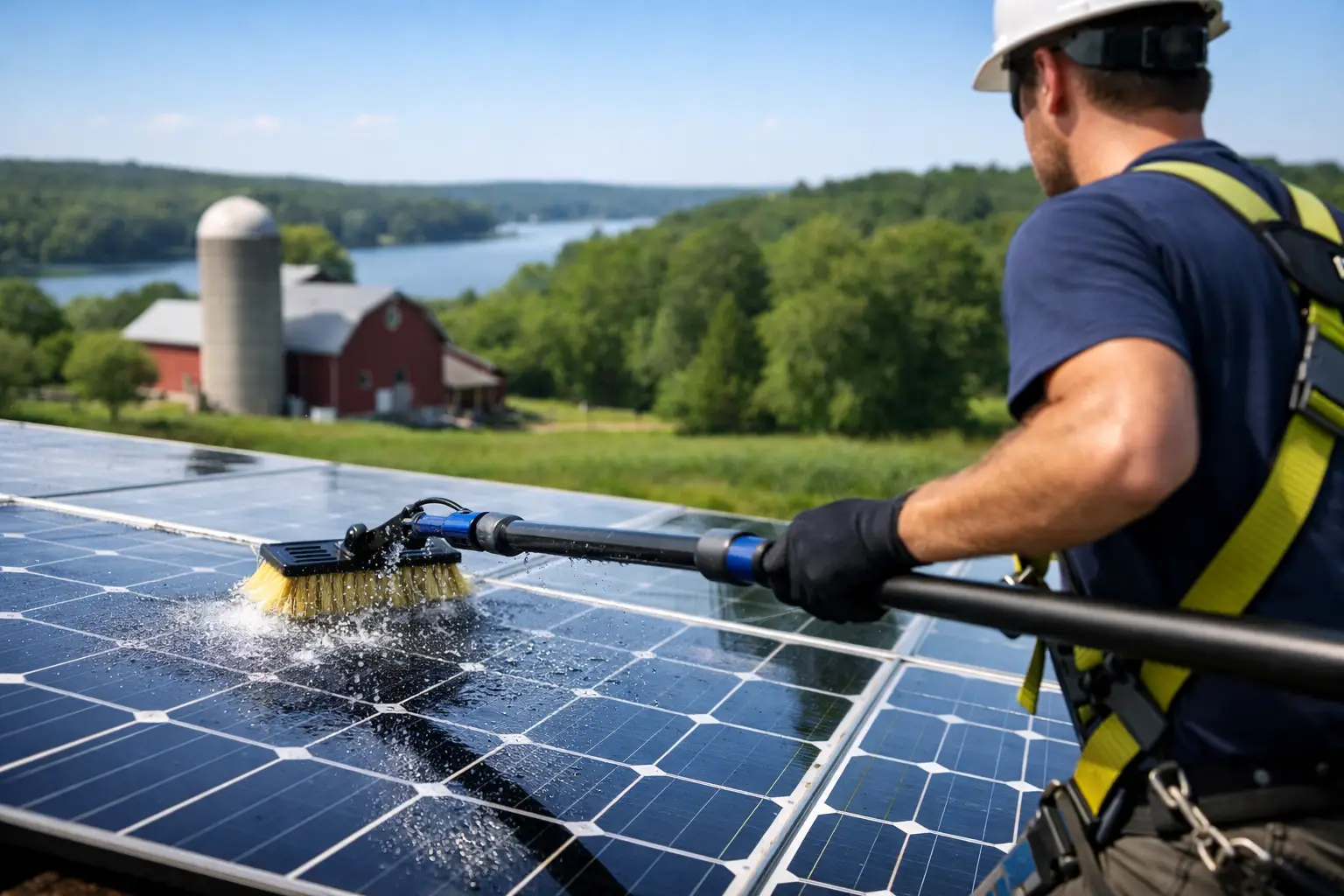
A dirty solar array is not always visibly dramatic from the ground. Pollen film, agricultural dust, bird droppings, pine debris, and mineral residue can reduce light reaching the cells long before panels look neglected. An instant solar cleaning quote gives Southern Wisconsin owners a practical starting point: a clear price based on the system’s visible layout, without requiring a mandatory site visit or a sales appointment.
For homeowners, that means you can assess the cost of professional cleaning before taking time off work. For commercial, farm, government, and multi-site operators, it means the quoting process can move quickly while still leaving room for a formal written scope, insurance paperwork, and site-specific safety planning.
What an Instant Solar Cleaning Quote Is Actually Based On
Instant quoting is not a random price generator. A reliable residential estimate starts with satellite imagery and the details visible from the property: array location, approximate panel count, roof sections, access conditions, and travel zone. This approach works especially well for standard residential rooftop systems where the panel layout is clear and access is straightforward.
The goal is transparent pricing, not false precision. Satellite images can establish the likely scope, but a professional still accounts for conditions that are difficult to confirm from overhead imagery. Steep roof pitches, limited ladder placement, unusually high rooflines, detached arrays, fragile roofing, heavy debris accumulation, or access restrictions may affect the final scope.
That distinction matters. A quote should tell you what service is included and what assumptions were used. It should not promise a low number online, then turn into a surprise once a technician arrives.
Why Panel Count Alone Is Not Enough
Two homes may each have 30 panels and require very different work. One array may sit on a low, simple roof with open ladder access. The other may span multiple roof faces, sit above landscaping, or require more deliberate fall protection and setup time. The panels are the same count, but the safe method and labor involved are not.
A credible solar cleaning quote considers more than square footage. It considers how the technician can reach the array without damaging roofing, gutters, landscaping, or the solar equipment itself. It also considers whether the panels have normal surface soiling or concentrated contamination that needs additional attention.
This is where owner-operated service has value. The person preparing the scope understands the actual cleaning method and remains accountable for completing the work. At Solar Alchemist, Marquis Mason is the sole technician, not a scheduler handing the job to an unfamiliar subcontractor.
What Professional Cleaning Should Include
A low quote is only useful if it covers the work your solar asset needs. The service method matters because photovoltaic modules are designed to produce power for decades, not to tolerate improvised washing.
Manufacturer-approved cleaning generally means avoiding high pressure, abrasive pads, harsh chemicals, and untreated hard water that can leave mineral spots behind. A proper process uses purified deionized water and soft rotary brushes to lift soiling without scratching glass or leaving a residue that attracts more dirt.
For Southern Wisconsin systems, the water source is a practical issue. Municipal and well water can contain dissolved minerals. When that water dries on glass, the mineral deposits can create spotting and may contribute to etching over time. A mobile 100% deionized-water rig provides a spot-free rinse without asking the property owner to supply water or power.
The scope should also state whether the service includes basic visual observations. Cleaning is not a substitute for electrical inspection or repair, but documenting visible debris buildup, broken glass, obvious staining, or access concerns can help an owner make informed maintenance decisions.
Production Loss Is the Reason to Request a Quote
Solar cleaning is not a cosmetic add-on. Soiling blocks incoming irradiance, which can suppress production across a panel or create uneven shading on individual cells. In more serious cases, persistent concentrated soiling can contribute to hot spots, where affected cells run hotter than surrounding cells.
The financial impact depends on the array’s location, tilt, weather, soiling type, electricity rate, and the duration of the buildup. A light seasonal pollen layer may have a modest effect. Bird droppings or agricultural dust concentrated in repeat locations can have a more meaningful impact, particularly when it remains in place through productive sunny periods.
Measured results are more useful than broad promises. Solar Alchemist documented a 16.7% production lift at the Wisconsin State Capitol and a 22% daily recovery for a Dane County homeowner under identical weather conditions. Those figures are not a guarantee for every system. They show why comparing production before and after cleaning can be worthwhile when an array has visible soiling or unexplained output decline.
If you monitor your inverter or utility portal, look for a production pattern that does not match comparable clear days, seasonal expectations, or nearby clean modules. A cleaning quote helps you evaluate the maintenance cost against the potential value of recovered generation and reduced long-term risk.
When an Instant Quote Works Best
Residential arrays are the best fit for an instant price when the roof and panels are plainly visible in imagery, the property is within the published service area, and there are no unusual access constraints. You should expect a straightforward request process, a clear price range or fixed price based on available details, and an opportunity to identify anything imagery may miss.
An instant quote is less appropriate for larger or more complex assets. Commercial rooftops, farms, ground mounts, municipal facilities, and portfolios may need a custom bid because their requirements go beyond panel cleaning. A facilities manager may need a certificate of insurance, W-9, OSHA-related safety documentation, Net-30 invoicing, multiple site schedules, or a defined reporting format.
That is not unnecessary friction. It is the difference between a consumer-style estimate and a scope that can be approved through an organization’s maintenance and procurement process.
Details That Make a Quote More Accurate
When requesting a price, provide the property address and, if known, the panel count or system size. A recent wide photo of the home or array can help confirm what satellite imagery shows. It is also useful to mention gates, dogs, locked access points, roof work in progress, known leaks, or any production concern you have noticed.
For business and institutional sites, include the number of arrays, approximate module count, desired service timing, site contact, invoicing requirements, and any contractor onboarding documents. If cleaning is part of a larger maintenance plan, say so. Recurring service can be scoped around the conditions that affect the site, such as spring pollen, harvest dust, nearby trees, or heavy bird activity.
The more accurate the initial information, the less likely a quote needs revision. Still, safety always comes first. If weather, roof conditions, or access conditions make the planned work unsafe, a responsible provider should reschedule or adjust the scope rather than force the job through.
Questions Worth Asking Before You Approve
Ask how the panels will be cleaned, whether the provider uses deionized water, and whether chemicals or pressure washing are involved. Ask who will be on your roof and whether that person is insured and trained for the work. If warranty protection matters to you, ask whether the method follows module manufacturer guidance.
For owners who want a maintenance record, ask what documentation is available after service. Before-and-after photos, service dates, array details, and proof of insured professional work can be useful when maintaining internal records, supporting warranty discussions, or documenting a loss for an insurance claim.
Price still matters, but it should be evaluated alongside method, accountability, and documentation. The cheapest wash is not necessarily the least expensive outcome if it leaves hard-water spotting, risks glass damage, or provides no record of what was done.
A well-prepared quote should make the next step easy: you know the expected cost, the cleaning method, the assumptions behind the scope, and who is responsible for the work. That clarity lets you treat solar cleaning as what it is - practical maintenance for an asset built to produce for years.