
A solar array can be worth $20,000, $100,000, or far more. Yet owners sometimes hire a cleaner based on the lowest price without asking who carries the risk if a panel cracks, a roof is damaged, or a worker is injured. Insured solar panel cleaning is not a premium extra. It is a basic requirement for anyone working around a high-value electrical asset on your property.
For Southern Wisconsin owners, that question matters even more after pollen season, farm dust, bird activity, and winter debris have reduced production. Cleaning should restore access to sunlight without creating a new liability, a warranty concern, or an unrecorded maintenance event.
What “Insured” Should Mean for Solar Cleaning
A company saying it is insured is a starting point, not the full answer. The useful question is whether its coverage and work practices fit the job being performed: accessing roofs, handling water around electrical equipment, and working near fragile glass modules and racking.
At a minimum, a professional contractor should be prepared to provide a current certificate of insurance when requested. Commercial operators, farms, municipalities, and facility managers often need it before a vendor is approved. Residential owners have the same right to ask. A certificate helps verify that the business carries active coverage, but it does not replace reading the scope of work or confirming what the contractor will do on site.
Insurance matters because solar cleaning has several distinct exposures. A worker may be injured while accessing a roof. A tool or hose may damage roofing, gutters, skylights, or property below. Improper cleaning can leave mineral deposits, scratch glass, or introduce water where it does not belong. A responsible contractor plans to prevent those outcomes first, then maintains insurance for the events no one intends.
Be cautious with vague assurances such as “my homeowners policy covers me” or “nothing has ever happened.” Those statements do not establish professional coverage or safe operating procedures. Solar is a power-producing asset, not a window-washing surface.
Insurance Does Not Make a Bad Method Safe
Insurance is essential, but it is not a substitute for proper technique. The wrong cleaning method can create damage that may not show up until later, when production falls, staining becomes visible, or a manufacturer questions service history.
Photovoltaic modules are engineered for outdoor conditions, but they are not designed for abrasive scrubbing, harsh chemicals, pressure washing, or hard-water rinsing. Deposits from municipal or well water can dry onto glass and leave a film that works against the purpose of cleaning. Aggressive tools can damage coatings, seals, frames, and surrounding roof materials.
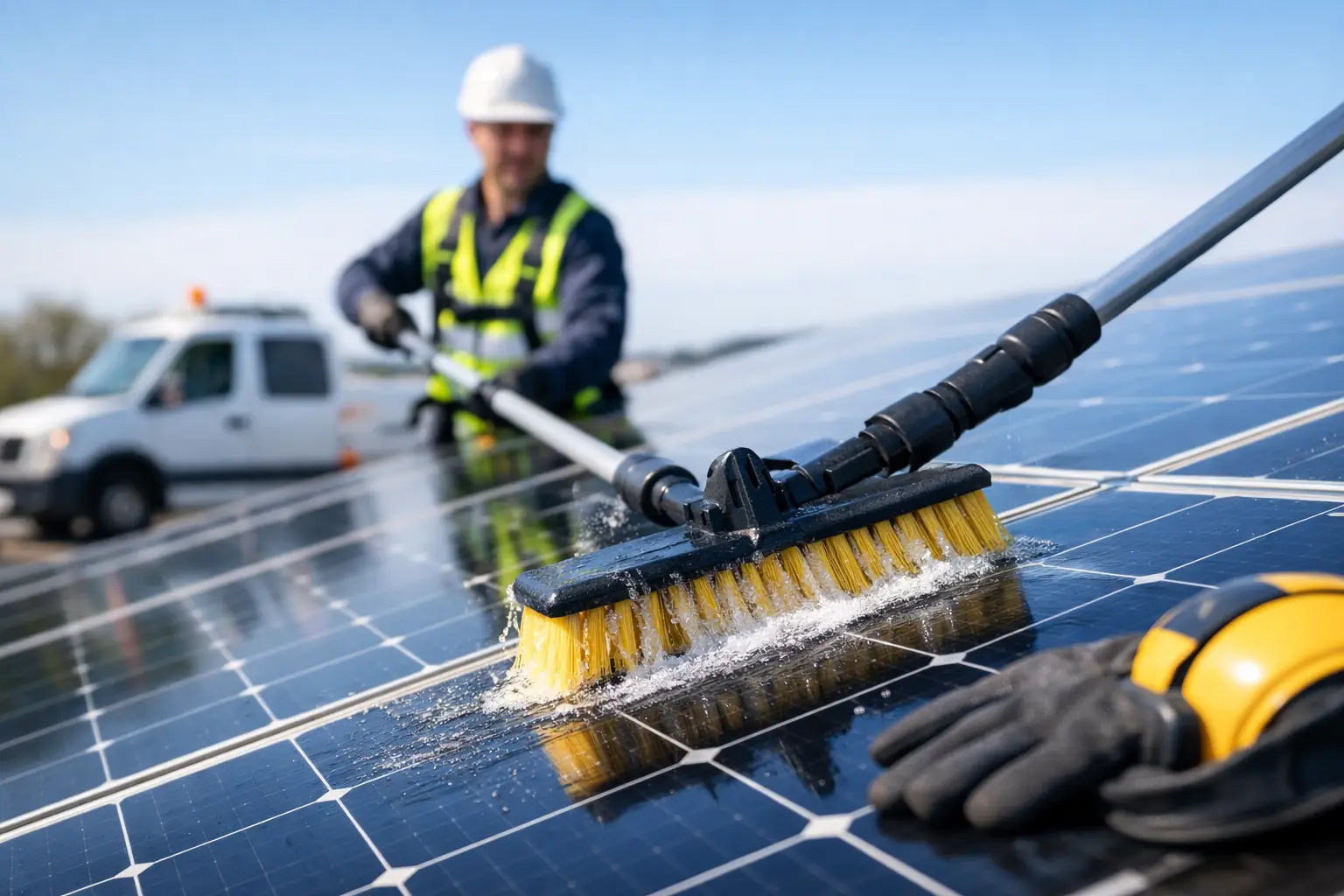
A sound process uses manufacturer-approved practices, soft equipment, and purified water. At Solar Alchemist, the work is completed with a mobile 100% deionized-water system and soft rotary brushes. The process is chemical-free and spot-free, with no need for a customer water or power hookup. That equipment choice is practical: it removes soiling while avoiding the mineral residue and chemical uncertainty that can come with improvised methods.
It also matters who is actually doing the work. A company may sell the job under one name and send an unfamiliar subcontractor to your roof. That can complicate accountability, safety verification, and documentation if there is a question afterward. An owner-operated provider who performs the service personally gives customers a clear point of responsibility from quote through final record.
The Risks Are More Than a Broken Panel
Visible damage is the obvious concern, but it is not the only one. Panels operating under uneven soiling can experience uneven current flow and heat stress. Bird droppings, dense pollen, agricultural dust, and stubborn debris can shade individual cells while the rest of the module remains in full sun. Over time, those conditions can contribute to hot spots and reduced output.
There is also the roof itself. Solar cleaning requires careful hose management, controlled roof access, and awareness of penetrations, wiring, conduit, skylights, and edge protection. A cleaner who treats the job like a quick exterior wash may overlook the details that protect both the system and the building envelope.
For larger sites, an incident can create operational problems beyond repair costs. A commercial property manager may need an incident report, a certificate of insurance, a W-9, approved vendor documentation, and clear invoices for internal accounting. Government and institutional owners may have formal procurement requirements. Those records are not administrative clutter. They establish who worked on the asset, when the work occurred, and what service was performed.
Insured Solar Panel Cleaning Supports Better Documentation
Cleaning records can be useful long after the panels look better. A documented maintenance history creates a timeline that can support warranty conversations, insurance claims, performance troubleshooting, and future asset decisions.
The strongest record is specific. It identifies the site or array, service date, observed conditions, cleaning method, and relevant before-and-after production information when available. Photos can be useful where buildup or localized contamination is visible. For a monitored system, comparing output under similar weather conditions can show whether soiling was materially suppressing production.
This is where cleaning becomes preventive maintenance rather than a cosmetic service. At the Wisconsin State Capitol, documented cleaning produced a 16.7% production lift. At a Dane County homeowner’s system, output recovered 22% in daily production under identical weather conditions. Those results are not a universal promise. Shading, system orientation, inverter behavior, weather, season, and the type of contamination all affect the outcome. But they demonstrate why measuring performance matters more than assuming a clean-looking array is producing at its best.
A good contractor will not promise a fixed percentage gain before seeing the site. Instead, they should explain the conditions that make cleaning more likely to pay off and provide a record that lets the owner evaluate the result.
Questions to Ask Before Anyone Goes on the Roof
You do not need solar-cleaning expertise to vet a provider. Ask direct questions and expect direct answers. Can the company provide a current certificate of insurance? Who will physically perform the work? Is the technician trained for roof access and OSHA-conscious safety practices? What water and brush system will touch the panels? Will the process use pressure, chemicals, or untreated water? What documentation will you receive after service?
For commercial, agricultural, and government sites, ask early about vendor paperwork, site-specific safety requirements, billing terms, and whether the company can provide a written scope quickly. A professional vendor should be comfortable with those requests. They are part of doing business with organizations that manage real operational risk.
For homeowners, the same principle applies in simpler form. Confirm that the cleaner understands solar modules, will not use tap water that dries into spots, and has a defined method for protecting your roof and property. The cheapest quote can become expensive if it excludes the safeguards your system needs.
When Cleaning Is Worth Scheduling
The need for cleaning depends on local conditions, not a calendar alone. A lightly soiled residential system in an open area may need less frequent service than panels near pine trees, gravel roads, active agriculture, bird roosts, or industrial dust. A system with a noticeable gap between expected and actual production deserves closer attention, especially after a dry, high-pollen period.
Look for dull film, visible droppings, debris accumulation along lower edges, or production that remains weak when weather and system conditions otherwise look favorable. Do not climb onto the roof to inspect closely unless you are equipped and qualified to do so. Monitoring data, ground-level observation, and professional assessment are usually enough to decide the next step.
The right service provider should make that step straightforward. Clear quoting, an honest assessment of access and soiling, proper insurance, and a documented cleaning method are signs that the contractor understands what is at stake.
Your panels were installed to produce for decades. Treat the people who service them as part of the asset-protection plan, not as an afterthought once the glass starts to look dirty.