
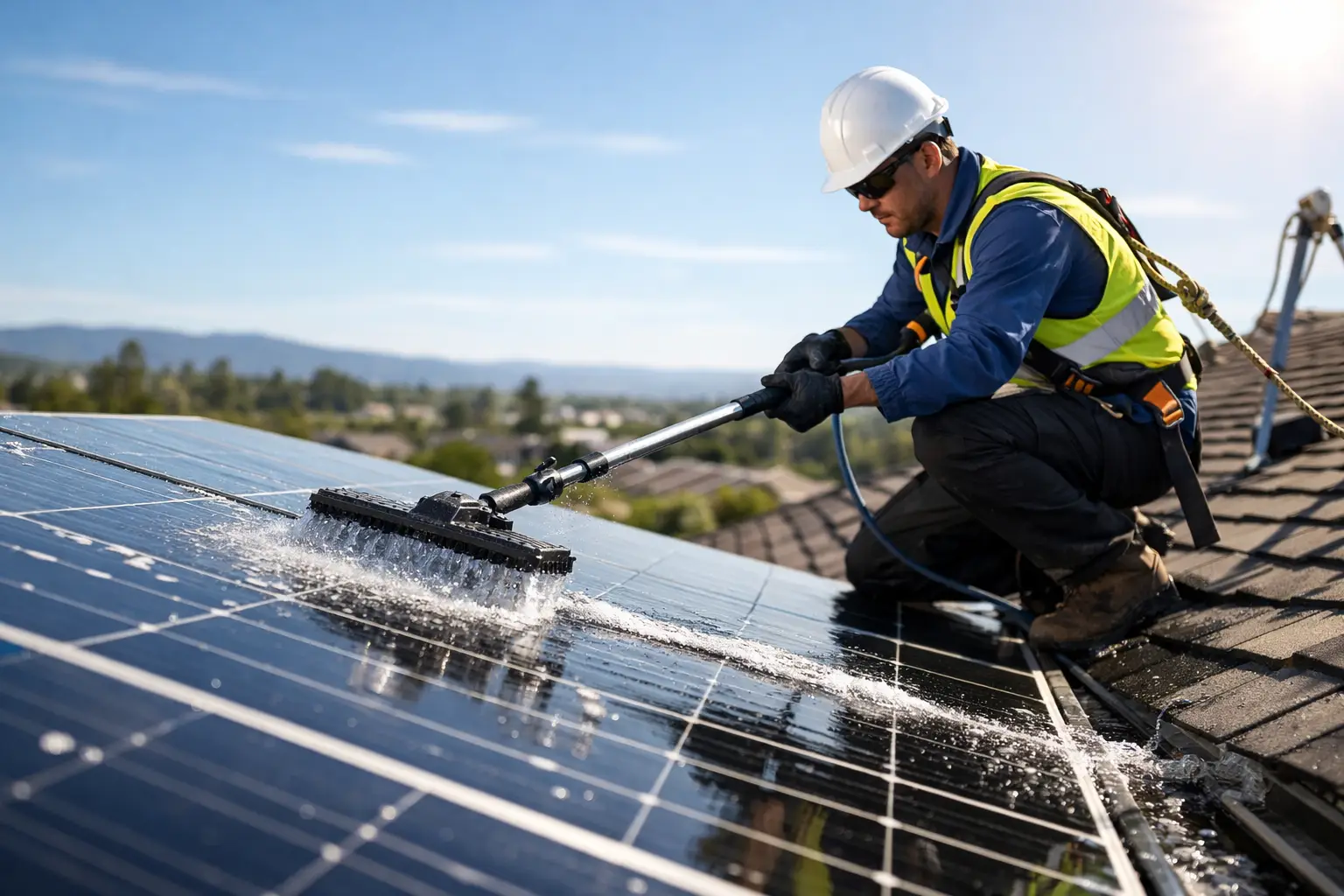
A dirty solar array is not just a production issue when it sits on a steep roof, above a loading area, or beside energized equipment. It is also a work-at-height job. That is why property owners looking for OSHA certified solar cleaning should ask a more useful question: what safety practices will actually be used on this specific site?
The phrase matters, but it can be misunderstood. OSHA does not issue one universal certification that makes every solar cleaning company automatically qualified for every roof. What responsible providers can demonstrate is OSHA-based training, appropriate fall-protection practices, documented job planning, insurance, and the discipline to stop when site conditions are unsafe.
For a homeowner, farm manager, facility director, or public agency, that distinction is practical. You are hiring someone to protect a valuable energy asset while working around fall hazards, wet surfaces, electrical equipment, and access constraints. The cleaning result matters. So does how the technician gets there.
What OSHA Certified Solar Cleaning Should Mean
A credible solar cleaning provider should be able to explain their safety approach in plain language, not hide behind a badge or vague claim. On most rooftop solar jobs, the central risk is falls. The appropriate controls depend on roof pitch, edge exposure, roof condition, access points, anchor locations, panel layout, and the work being performed.
That may include a site-specific fall-protection plan, inspected personal protective equipment, secure ladder practices, proper tie-off where required, and a clear understanding of when a roof should not be accessed. A flat commercial roof with compliant parapets is not the same job as a two-story residential roof with a slick metal surface. An agricultural building can add fragile roof materials, dust, overhead lines, and equipment traffic below.
OSHA-certified practices also extend beyond harnesses. Solar cleaning involves water near electrical systems, so crews need methods that avoid damaging modules, wiring, connectors, junction boxes, and roof penetrations. The right provider treats the array as electrical infrastructure, not as a row of windows.
Safety and Panel Protection Are Connected
The fastest way to create risk is to treat panel cleaning as casual exterior washing. Pressure washing can force water where it does not belong, aggressive abrasives can damage glass coatings, and hard water can leave mineral deposits that defeat the purpose of cleaning. Chemicals may also conflict with manufacturer guidance or leave residues that attract more dirt.
A manufacturer-conscious process uses purified water and soft, panel-safe agitation. One effective approach is 100% deionized water applied with soft rotary brushes. Because deionized water dries without mineral spotting, it avoids the hard-water residue that can occur with ordinary tap water. It also eliminates the need for soaps or harsh chemicals on the modules.
The safety advantage is operational as well as technical. A self-contained mobile water system means the technician does not need to run hoses through a customer’s building, rely on a rooftop spigot, or create extra trip hazards around an occupied property. It also helps avoid disrupting a facility’s water supply or requiring a homeowner to provide power and water hookups.
Cleaning methods must still be matched to conditions. Frozen panels, ice, high winds, lightning risk, unstable roof surfaces, or compromised access can make a scheduled visit unsafe. A qualified technician does not force the job because it is on the calendar. Rescheduling is better than risking a fall, damaging a module, or putting people below the roof in danger.
Why Documentation Matters to Solar Owners
For major solar investments, cleaning should leave more than a visibly cleaner array. It should create a maintenance record. This is especially valuable for commercial, agricultural, government, and multi-site owners who need clear vendor documentation for operations files, insurance requirements, or internal reporting.
A professional record can include the service date, site location, panel condition observations, cleaning method, before-and-after photos when appropriate, and notes about visible concerns such as heavy bird droppings, pollen buildup, localized staining, or damaged components. The cleaning technician is not replacing an electrician or solar installer, but a careful visual review can help surface issues that deserve qualified follow-up.
Documentation also supports warranty-minded maintenance. Solar module manufacturers generally expect owners to follow approved care guidance, particularly around cleaning products, pressure, abrasive tools, and access. No cleaning company can promise warranty coverage, because warranty terms vary by manufacturer and installation. However, using manufacturer-safe methods and retaining service records puts the owner in a far stronger position than undocumented do-it-yourself cleaning or an unknown contractor’s process.
For organizations, vendor readiness matters too. Certificates of insurance, W-9s, written scopes, and invoicing terms are not paperwork for its own sake. They help property managers, municipalities, schools, farms, and businesses hire a contractor who can operate within their procurement and risk-management requirements.
The Cost of Treating Soiling as Cosmetic
Southern Wisconsin solar arrays collect more than ordinary dust. Spring pollen, agricultural debris, roadside grime, pine material, bird droppings, and mineral residue can create uneven shading across a module. When cells are shaded, the panel’s output can fall. Persistent localized soiling can also contribute to hot spots, where affected cells run hotter than surrounding cells.
The financial effect depends on the array, weather, season, tilt, nearby trees, and the type of contamination. A light, even layer of dust may have a modest impact. Thick pollen, repeated bird droppings, or a farm environment with concentrated dust can have a much larger one. That is why responsible cleaning recommendations should be based on evidence rather than an automatic monthly schedule.
Production monitoring offers a useful starting point. Compare output against prior periods with similar weather, review inverter alerts, and inspect the array from the ground when possible. If performance has softened while weather and system health appear normal, soiling is a reasonable factor to investigate.
Measured results can be meaningful. Solar Alchemist documented a 16.7% production lift after cleaning at the Wisconsin State Capitol, and a Dane County homeowner saw a 22% daily recovery under identical weather conditions. Those results are evidence of what soiling can do in specific conditions, not a promise that every array will produce the same gain. The condition of each site decides the opportunity.
Questions to Ask Before Hiring a Cleaner
A qualified provider should welcome practical questions. Ask how they access and protect the roof, whether they use fall protection appropriate to the site, and whether the person quoting the work will be the person performing it. Ask what water is used, whether chemicals or pressure are involved, and how the method aligns with panel manufacturer guidance.
Also ask what happens if weather changes or the roof appears unsafe on arrival. The answer should be clear: the job pauses, access is reassessed, and the owner is informed. A contractor willing to bypass safety controls to finish quickly is not protecting your system or your property.
For commercial and public-sector work, confirm insurance limits, documentation procedures, worker qualifications, and whether subcontractors will be used. A single accountable technician can be a meaningful advantage when consistency, communication, and chain of responsibility matter.
A Better Standard for Roof-Mounted Solar Care
The right solar cleaning provider is not simply someone willing to get on a roof with a brush. They should understand that production, electrical safety, roof access, manufacturer guidance, and maintenance records are part of the same assignment.
Before scheduling service, look at your production data and take note of visible soiling. Then choose a provider who can explain their OSHA-based practices, panel-safe cleaning method, and documentation process without overselling the result. Your solar array was built to work for decades. Its maintenance should be handled with that same long-term view.