Do Dirty Panels Cause Damage? The Real Risks
By Marquis Mason ·
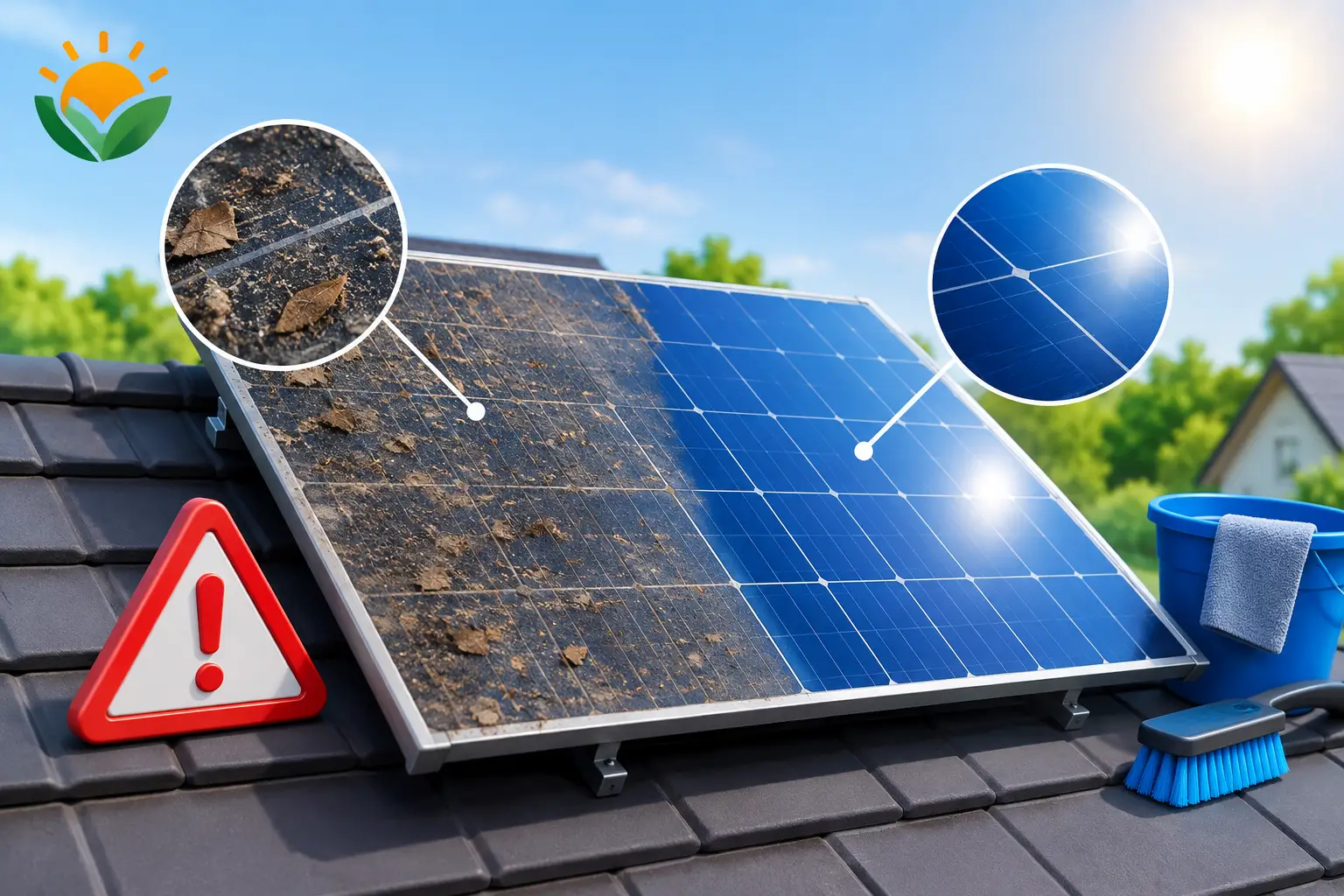
A layer of pollen may look harmless from the driveway. Bird droppings, hard-water spotting, and agricultural dust are a different matter. So, do dirty panels cause damage? They can, but the risk depends on what is on the glass, how long it remains there, and whether the affected area creates uneven shading across the solar cells.
The immediate cost of soiling is usually lower energy production. The more serious concern is that stubborn, concentrated buildup can contribute to hot spots, mineral etching, and avoidable stress on a valuable solar asset. Cleaning is not cosmetic when contamination is persistent. It is a practical way to protect production and create a record that the array has been cared for properly.
Do Dirty Panels Cause Damage to Solar Equipment?
Not every dusty panel is being physically damaged. A light, even coating of dry dust may reduce output without creating an urgent equipment problem. In Southern Wisconsin, however, soil rarely stays simple for long. Spring pollen mixes with rain. Well-water overspray dries into mineral residue. Nearby fields can produce fine dust that bonds to damp glass. Pine debris, insects, and bird droppings create localized obstructions that do not behave like a uniform film.
That distinction matters because solar cells work together electrically. When one portion of a panel is shaded more heavily than the rest, the shaded cells can be forced to operate differently from surrounding cells. The energy loss may be modest at first, but repeated heat stress in a consistently shaded area is a condition worth preventing.
The panel frame, glass, wiring, and supporting components are designed for outdoor exposure. They are not designed to benefit from a long-term layer of contaminants. A sound cleaning plan addresses the material on the panel before it becomes baked on, chemically reactive, or difficult to remove without more aggressive methods.
The Damage Risks Behind Common Types of Buildup
Hot spots from uneven soiling
Hot spots occur when a portion of a panel is shaded or obstructed while the rest remains exposed to sunlight. The affected cells can run hotter than neighboring cells. Bird droppings are one of the most common triggers because they create dense, irregular patches that block light far more completely than ordinary dust.
Modern panels use bypass diodes to help manage partial shading. Those components reduce the effect, but they do not make repeated localized obstruction irrelevant. If the same area is blocked through long sunny periods, heat can build around the shaded cells. The practical goal is not to wait for visible failure. It is to remove the obstruction before recurring thermal stress becomes part of the array's normal operating condition.
Mineral deposits and glass etching
Rainwater alone is generally not the problem. Water with a high mineral content, irrigation overspray, or water that dries after carrying dust can leave deposits on the glass. Those deposits can form a cloudy film or distinct spots that continue blocking light after the water is gone.
Over time, mineral residue can bond tightly to the panel surface. In severe cases, it can contribute to etching or staining that is no longer fully removable. That is a permanent loss of clarity, not just dirt. The risk is one reason professional panel cleaning should use purified water rather than untreated tap water that can leave new minerals behind.
Organic material that holds moisture
Leaves, moss-like growth around panel edges, wet pollen, and decomposing debris can hold moisture against areas that should dry quickly. The concern is not that one leaf will ruin a panel. The concern is recurring buildup in the same locations, particularly near lower edges and frames where debris naturally collects.
Moisture retention can also make dirt harder to remove. What might have rinsed away when fresh can become a bonded layer after repeated wet-dry cycles. Addressing it early is usually safer, faster, and less expensive than waiting until residue is visibly hardened.
Abrasion from the wrong cleaning method
There is another side to this question: dirty panels can create a damage risk, but poor cleaning can too. Dry brushing gritty dust across glass, using abrasive pads, applying harsh chemicals, or blasting seals and edges with high pressure can create problems that proper cleaning is meant to avoid.
Manufacturer-approved cleaning methods focus on gentle contact, clean water, and appropriate tools. A 100% deionized-water process removes soil without adding mineral spots or chemical residue. Soft rotary brushes can lift bonded grime while avoiding the scratch risk associated with aggressive scrubbing. The objective is clean glass and documented care, not a quick-looking result that creates a new concern.
Output Loss Is Often the First Warning Sign
Production data is often more useful than visual appearance. From ground level, a panel can look reasonably clean while a thin film of pollen or dust is reducing how much sunlight reaches the cells. Conversely, a visibly dusty array may be producing close to expectations if the soiling is light and even.
Look for a sustained production decline under comparable weather conditions, especially if nearby trees have released pollen, field work has increased airborne dust, or birds regularly perch above the array. Compare similar sunny days when possible. Utility bills alone are not always enough because household usage and weather vary, but monitoring data can show whether solar generation is underperforming.
Solar Alchemist documented a 16.7% production lift after cleaning panels at the Wisconsin State Capitol. A Dane County homeowner recorded a 22% daily recovery under identical weather conditions. Those results are not a promise that every array will recover the same percentage. They are proof that soiling can be a measurable operational issue, not merely a cosmetic one.
When Dirty Panels Need Attention Sooner
A scheduled cleaning approach makes sense for many properties, but certain conditions justify faster action. Heavy bird droppings, sprinkler or irrigation overspray, construction dust, and agricultural activity can create concentrated contamination quickly. Properties surrounded by mature pines may also see recurring debris and pollen accumulation.
Pay close attention after a dry stretch followed by light rain. That pattern can turn loose dust into a thin mud layer, then leave residue as the surface dries. Also watch for streaking, white mineral spots, dark patches, or buildup concentrated along the bottom edge of panels.
For commercial, farm, and public-sector solar owners, the timing question has a documentation component. A dated cleaning record, production comparison, and service documentation can support internal asset management and provide useful evidence if warranty or insurance questions arise. It is far easier to show a disciplined history of care than to reconstruct what happened after a production issue appears.
How to Reduce Risk Without Over-Cleaning
Cleaning too often without a reason is not the point. The right frequency depends on the array's environment, the type of contamination, rainfall patterns, and production performance. An open residential roof with little bird activity may need less attention than a farm array near field dust or a commercial roof exposed to hard-water overspray.
Start with observation and data. Check for persistent deposits rather than temporary dust. Review production after high-pollen periods, dry weather, or nearby agricultural activity. If cleaning is warranted, use a process that is appropriate for photovoltaic glass and follow the panel manufacturer's guidance.
A professional service should be able to explain its water quality, tools, safety practices, and documentation process in plain terms. For high-value arrays, it also matters who is doing the work. An insured, OSHA-certified technician using manufacturer-safe methods provides a different level of accountability than a general wash crew using whatever equipment is on hand.
Dirty panels do not automatically mean damaged panels. They do mean your solar asset deserves a closer look when buildup is concentrated, mineral-heavy, or persistent. Treat unusual soil as a production and preservation question early, while careful cleaning can still restore clarity, recover output, and keep small issues from becoming permanent ones.