What Causes Solar Power Losses on Clean Panels?
By Marquis Mason ·
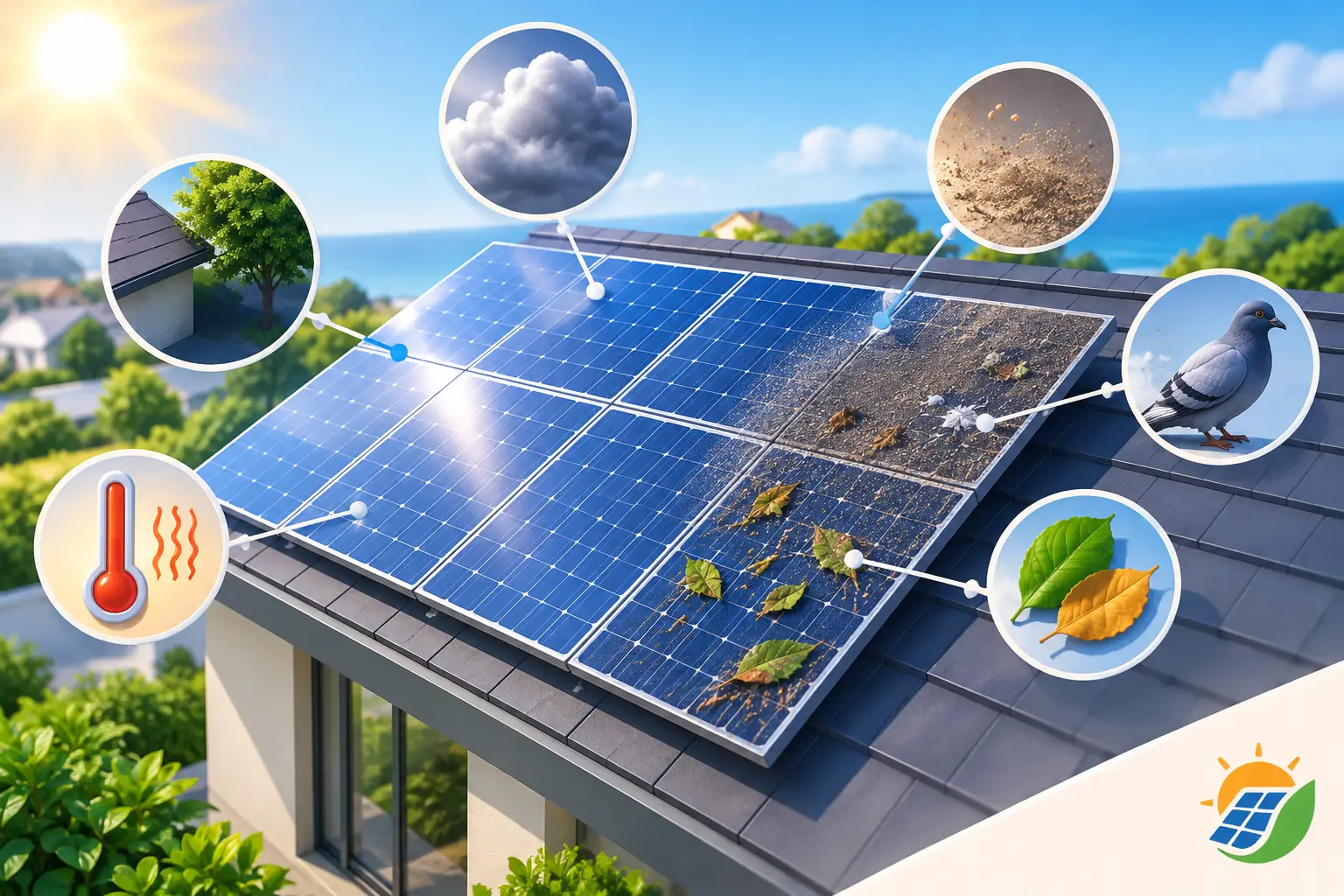
A solar array can look perfectly fine from the driveway while producing noticeably less electricity than it did a year ago. That gap matters when you have invested $20,000 or more in rooftop solar. So, what causes solar power losses? Some losses are expected and seasonal. Others point to a correctable problem such as pollen buildup, bird droppings, hard-water spotting, or a shaded section of the array.
The practical question is not whether panels ever lose output. They do. The question is whether the loss matches the weather, the season, and the age of the equipment - or whether your solar asset is being held back by something you can identify and address.
What Causes Solar Power Losses?
Solar panels make electricity when sunlight reaches photovoltaic cells. Anything that reduces the amount of usable light reaching those cells, raises their temperature, or interrupts the electrical path can reduce production. Several causes can overlap, which is why a single low-production day rarely tells the whole story.
For Southern Wisconsin owners, the most common pattern is seasonal output variation combined with surface soiling. Spring pollen, agricultural dust, pine debris, summer bird droppings, and mineral residue from sprinkler overspray can all limit light transmission. Winter snow cover can stop production temporarily, while short winter days and a low sun angle reduce production even when panels are clear.
The key is to compare like with like. A cloudy July day should not be measured against a clear July day. A better comparison is production on similar weather days before and after a visible source of soiling is removed.
Soiling Blocks More Than You Can See
A thin, even layer of dust may not look serious from ground level. On a panel surface, however, it scatters and absorbs sunlight before it reaches the cells. The loss varies with the type of soil, how long it has remained in place, panel angle, local weather, and whether rain can rinse the surface effectively.
Rain helps with loose dust, but it is not a cleaning method. Rainwater can dry into spots, and it often leaves behind pollen, grime, or dissolved minerals. It also does little for sticky residues such as bird droppings, sap, and dense agricultural dust. Those deposits can create concentrated shade over individual cells.
That matters because cells in a module work together. When one area is restricted, it can limit the performance of the connected cell group. Persistent, concentrated soiling may contribute to hot spots, where affected areas run hotter than surrounding cells. Hot spots are an asset-protection concern, not merely a production concern.
At Solar Alchemist, documented results have shown what that distinction can mean in real conditions: a 16.7% production lift at the Wisconsin State Capitol and a 22% daily recovery for a Dane County homeowner under identical weather conditions. Those figures are not a promise for every roof. They are proof that measurable recovery is possible when soiling is the cause.
Bird Droppings, Pollen, and Mineral Deposits Behave Differently
Not all dirt creates the same risk. Pollen can form a broad yellow-green film across a large section of glass. Fine dust can settle evenly, especially near fields, gravel drives, and construction activity. Bird droppings are smaller but denser, producing a more concentrated obstruction.
Hard-water deposits deserve special attention. If irrigation or overspray repeatedly dries on panel glass, the minerals can bond to the surface. Left long enough, they can become harder to remove and may contribute to glass damage. A spot-free rinse with 100% deionized water avoids adding more mineral residue during cleaning.
Heat Is a Normal but Real Source of Loss
Solar panels are tested under controlled conditions, not on a hot, still August afternoon. As panel temperature rises, electrical efficiency generally falls. This is why an array can produce less power at noon on a very hot day than on a cooler, sunny day with similar light levels.
Heat loss is normal, and cleaning does not eliminate it. Still, soiling can make the situation worse. A dark layer of grime absorbs heat, while partial shading can create uneven temperatures across the module. The distinction is useful: hot-weather losses are expected, but a dirty panel surface adds a preventable variable.
Shade Changes Throughout the Year
Shade is not limited to a large tree hanging directly over the roof. A nearby branch, chimney, vent stack, utility pole, or changing tree canopy can cast a narrow moving shadow across part of an array. Morning and late-afternoon shade may have a smaller annual effect than midday shade, but even a small shaded area can affect production disproportionately depending on how the panels are electrically arranged.
Seasonal changes are easy to miss. Trees leaf out, the sun tracks lower in winter, and shadows lengthen. If output drops at the same time each year, compare your monitoring data with the likely shade pattern before assuming dirt is the only cause.
Soiling and shade can also look similar in production data. Both reduce output. The difference is physical evidence: shade changes with the sun's position, while soil remains on the glass until weather or proper cleaning removes it.
Snow, Ice, and Wisconsin Weather
Snow cover is a straightforward cause of temporary solar power loss. If sunlight cannot reach the cells, the panel cannot produce normally. Light snow may slide off tilted panels as temperatures change, while wet, packed snow can remain longer. Ice, freeze-thaw cycles, and winter grime can leave a surface looking clearer than it actually is.
It is not useful to judge annual performance from a few snowy days. Instead, look at monthly and year-over-year trends. A winter dip is normal. A lingering production deficit after snow has cleared, especially during spring pollen season, is worth investigating.
Avoid aggressive snow removal tools on panel glass. Scraping can create scratches or damage components. The aim is to protect production without creating a larger asset problem.
Electrical Limits Can Also Reduce Output
Not every loss starts on the glass. Inverter clipping can occur when an array produces more DC power than the inverter is designed to convert at a given moment. This usually appears as a flattened peak in monitoring data during strong sun and is often a design characteristic rather than a fault.
Inverters can also reduce production during high temperatures or protective shutdowns. Connection issues, damaged conductors, failed optimizers, and other electrical faults can cause more serious underperformance. These problems often show up as a sudden, persistent change in output or a clear difference between panel groups in system monitoring.
A cleaning service should not claim that every production issue is dirt. Responsible diagnosis starts with the evidence. If panels are visibly soiled and output recovers after cleaning under comparable weather, the result is clear. If the glass is clean but production remains unusually low, your monitoring data can help a qualified solar professional isolate the cause.
How to Tell Whether Cleaning Is Likely to Help
Start with your production app or utility records. Compare recent sunny-day output with similar days from the same season in a prior year, allowing for normal weather differences. Then inspect safely from the ground or with appropriate access: look for pollen film, streaking, droppings, debris accumulation near the lower edge, and sprinkler spotting.
A documented cleaning provides a useful before-and-after reference. Record production before service, photograph visible soiling where possible, and compare output on similar weather days afterward. This creates a maintenance record that can support warranty documentation and insurance discussions if surface damage or soiling-related concerns arise later.
Proper method matters. Manufacturer-approved cleaning uses soft rotary brushes and pure deionized water, not pressure washing, harsh chemicals, or untreated tap water that can leave mineral spots behind. The goal is not to make panels look cosmetically brighter. It is to remove light-blocking residue without adding risk to the glass, frames, seals, or roof.
Treat Production Loss as Evidence, Not Guesswork
Solar output will rise and fall with weather, temperature, daylight, and season. That is normal. What deserves attention is a pattern that does not match those conditions: a recurring spring decline, visible deposits that rain is not removing, or a production gap that remains after clear weather returns.
The most useful next step is simple: check your production history, look for physical signs of soiling, and use comparable weather days to judge the result. A clean panel surface gives you a clearer answer about what your solar investment is actually capable of producing.