
Solar Panel Maintenance Guide for Wisconsin Farms
By Marquis Mason ·
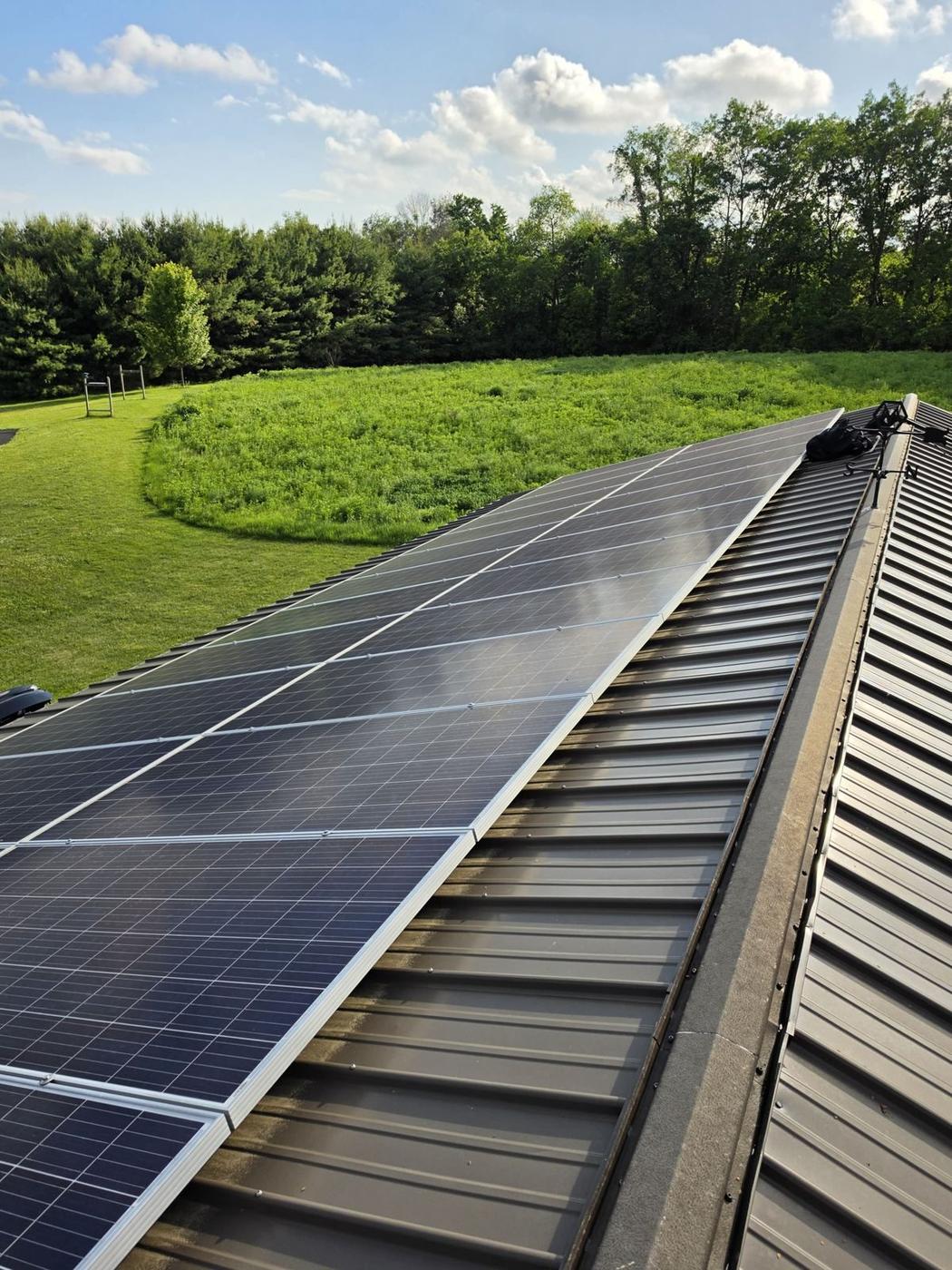
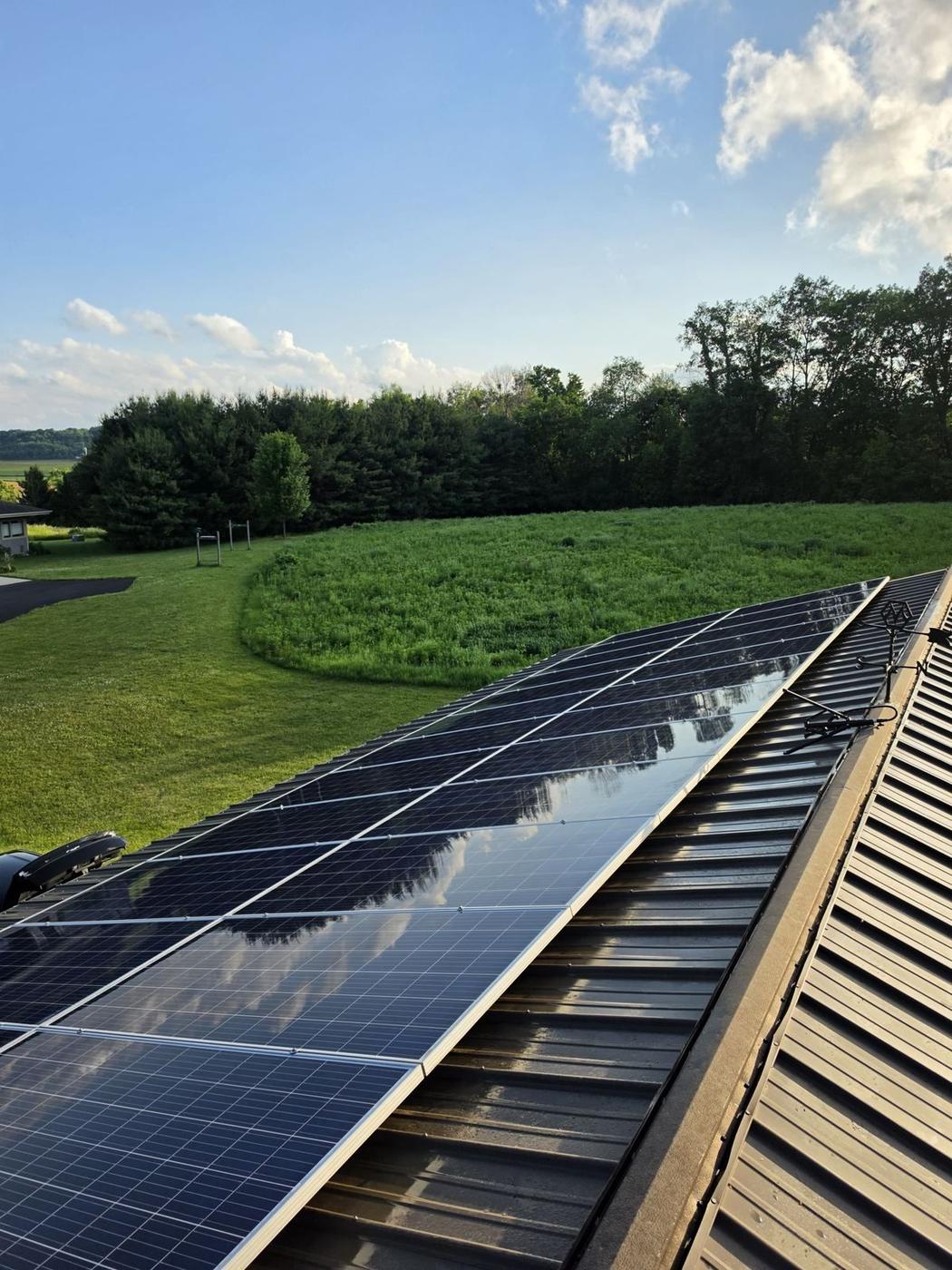
A farm array soils differently than a rooftop in town. It sits in the middle of the dust source. Planting and harvest put fine soil in the air for weeks. Chaff and pollen settle on glass that is often tilted low and close to the ground, where rain splash adds mud instead of rinsing anything off. Birds work the fence lines and the barn roof, and the array is downwind of both.
None of that makes farm solar a bad idea. It makes it a maintenance item, like everything else on a farm that produces something. Here is what the research says, when to clean, and what it costs.
What farm soiling costs
The clearest study on the kind of soiling farms get comes from NREL. Five utility-scale plants in a rainy climate went more than seven years without cleaning, and pollen alone cut performance about 15% at peak season, with annual losses around 10% when no cleaning was planned. Those plants were neglected far longer than any working farm array should be — treat that as the ceiling, not the forecast. The point that transfers: pollen and field dust do not wash off in the rain, and the loss is measured, not guessed.
Run a Wisconsin-sized example. A 30 kW ground-mount system in the Madison area produces about 36,900 kWh a year, based on NREL's PVWatts figure of 1,231 kWh per kW for Madison. A 3% soiling loss on that system is about 1,100 kWh a year. Valued at the Wisconsin residential average of 19.74¢/kWh — your farm's actual rate depends on your tariff, so use this as a benchmark — that is roughly $218 a year of production sitting on the glass as dirt. At 5%, it's about $364. The full method for running your own numbers is in how to calculate soiling losses.
The farm-specific risks
Bird droppings. LONGi's own installation manual warns that accumulated contaminants, bird droppings named specifically — reduce output and can cause hot spots. (LONGi's manual language is quoted in the International Solar Cleaning Association's compilation of manufacturer manuals.) A dropping shades one cell hard while the rest of the string keeps pushing current, and that cell heats up. More detail in the hot spots post.
Cemented layers. Dust that gets wet, dries, and gets wet again bonds to glass over seasons. The Joule review of soiling research notes that cemented dust layers can become practically irremovable if left long enough. A farm array cleaned on a schedule never gets there. One left for five years might.
Timing against the field calendar. The worst soiling arrives in waves: tree pollen in spring, planting dust, then harvest. Madison's pollen season peaks in May, and ragweed runs into early October. A sensible farm schedule is a cleaning after spring pollen and planting, and a second look after harvest if the glass tells you it needs one.
What I do, and what I don't
For most farm arrays I clean with 100% deionized water and a soft rotary brush, at low pressure, matched to the panel manufacturer's own instructions — the method detail is in the deionized water post. Ground-mount systems are the straightforward work in this business; industry data in the Joule review puts rooftop cleaning at 3–8 times the cost of ground-mounted, and access is the reason. My ground-mount rate is $6 per panel with a $125 minimum for smaller systems; larger farm arrays price on the commercial tiers on the cost page.
Cleaning includes a visual inspection — I flag anything that looks off: cracked glass, chewed wiring, a panel sitting wrong. What I don't do is electrical work. Inverter faults, wiring repair, panel removal, and installs get referred to the people licensed for them. Snow removal too — I won't scrape a money-making asset with the wrong tools to save a week of winter production that Wisconsin barely gets anyway.
Your array's manufacturer has a cleaning section in its installation manual, and it outranks anything on this page. If you don't have the manual, I look it up before I clean — that is covered in the warranty post.
If you want an outside set of eyes on a farm array anywhere in southern Wisconsin, text me at (608) 571-4173. Satellite quote is free, and I'll tell you if the honest answer is "check it again after harvest."