
How Often Should You Clean Solar Panels?
By Marquis Mason ·
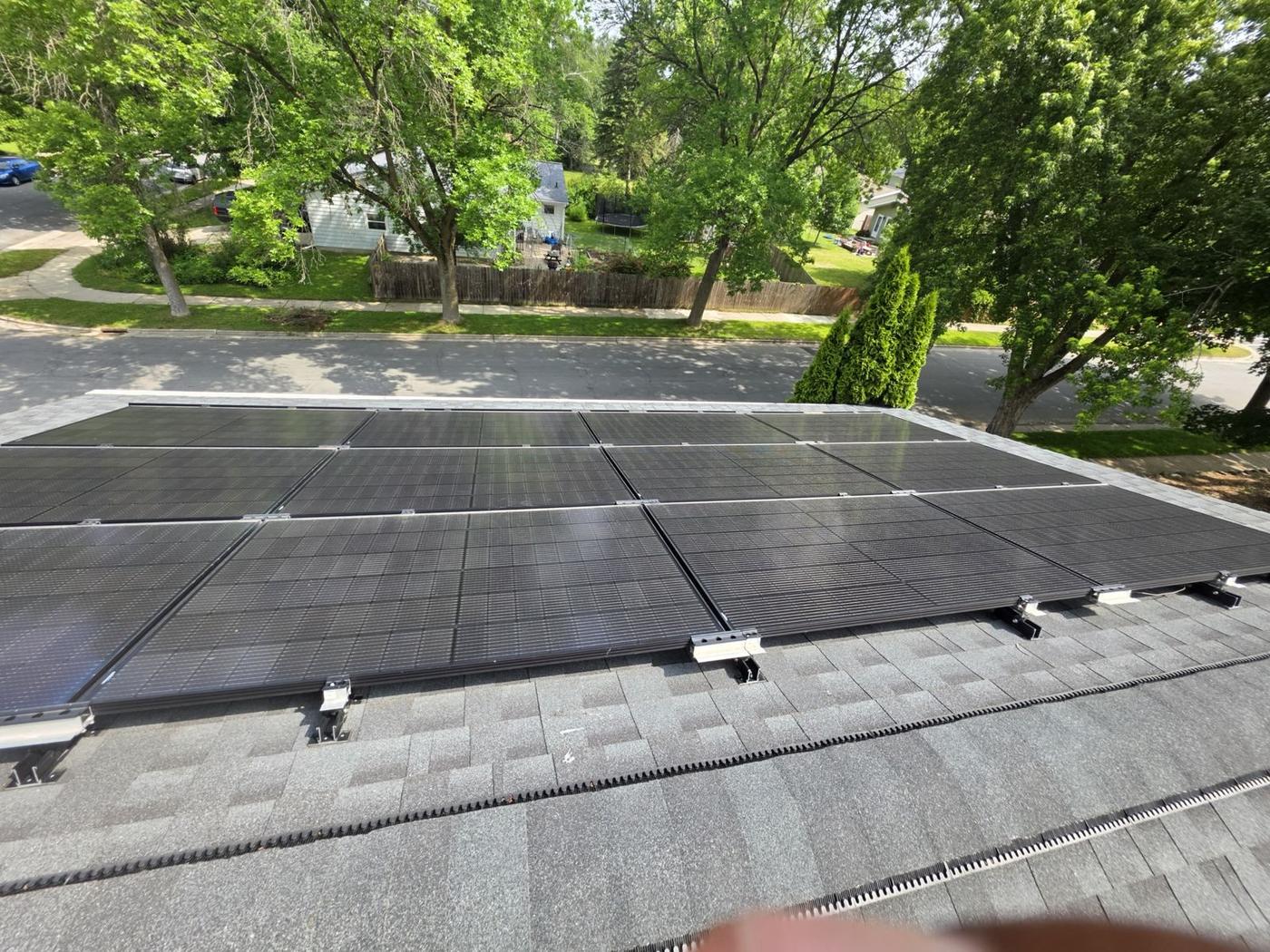
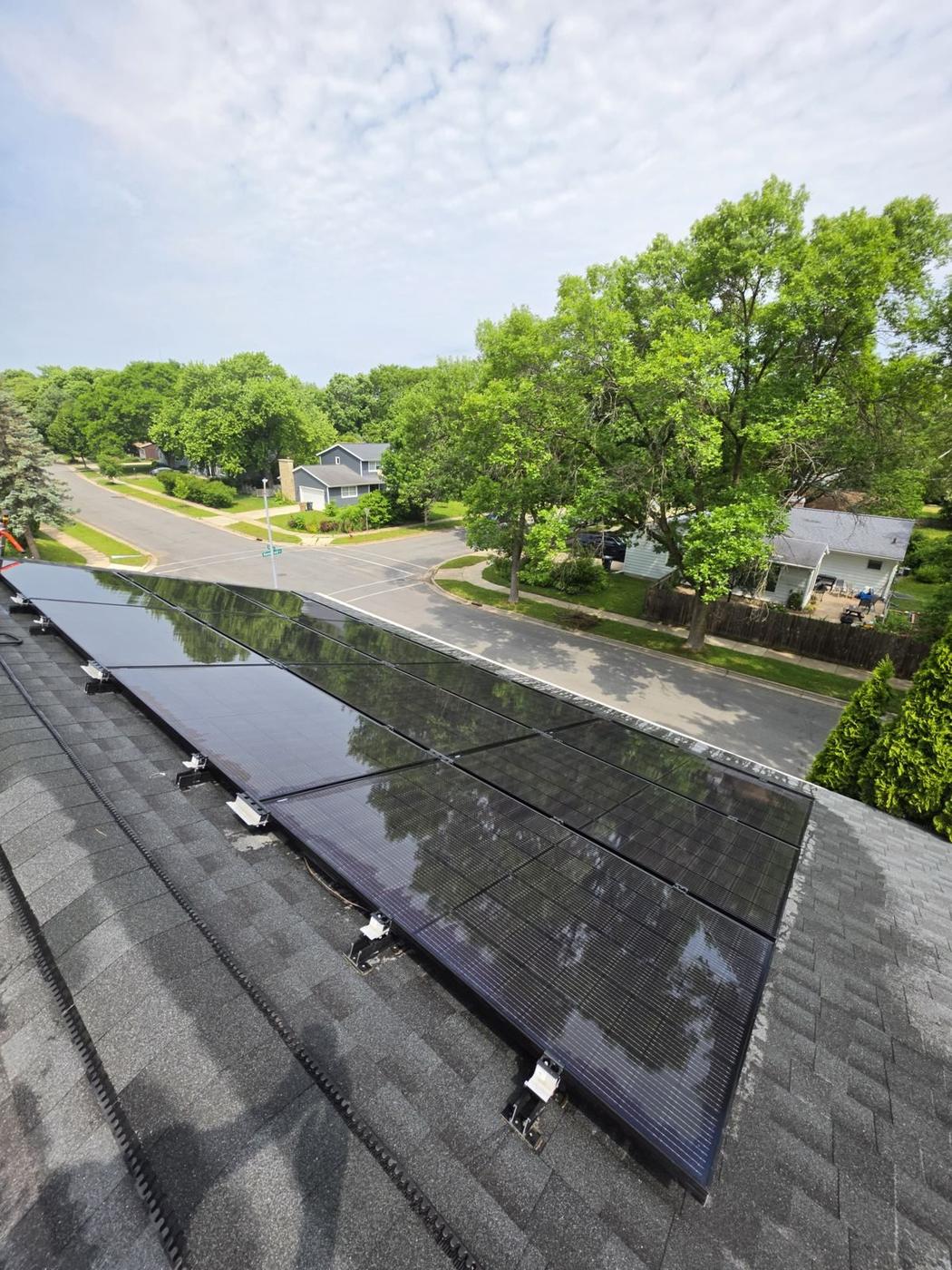
Ask three panel manufacturers how often to clean, and you get three different answers. That is not a dodge. It is the actual state of the manuals, and it is why anyone who gives you one universal number for every roof is guessing.
What the manufacturers say
- JinkoSolar: clean preferably once a year, more often in dusty conditions — that's from its installation manual, quoted in the International Solar Cleaning Association's compilation.
- Panasonic: clean the panel surface twice a year to optimize production.
- Silfab: cleaning is advisable 2–4 times a year — in arid climates, which Wisconsin is not.
The IEA's photovoltaic program lands in the same place: there is no one-size-fits-all solution, and schedules should be tailored to local conditions. Your manual sets the floor. Your site sets the real schedule.
The Wisconsin calendar does most of the deciding
Madison's pollen comes in three waves, tracked by Pollen Sense sensor data:
- Tree pollen: late March to mid June, peaking in April. Oak, maple, birch — the trees over most Madison roofs.
- Grass pollen: late May to early August.
- Ragweed: late August into early October.
Total pollen load peaks in May, and Madison's average runs above the national average. May is also when production ramps into its best months. That overlap is the whole argument for a late-spring cleaning: get the tree pollen film off just as the high-production season starts, and the array earns at full strength through summer. NREL measured pollen cutting output about 15% at peak season on uncleaned plants — the film is not cosmetic.
A second cleaning in early fall earns its keep for arrays near farm fields (harvest dust), under heavy tree cover (a summer of droppings and debris), or on low tilts that hold dirt at the frame edge. For a clean, steep, tree-free roof, the second visit is often optional — and if you ask me, I'll say so.
Use your production data as the referee
Frequency rules are a starting point. Your monitoring app settles arguments. If output on comparable clear days has sagged and weather doesn't explain it, the array is telling you the interval is too long. If a cleaning only recovers 1%, stretch the interval. The method for measuring that honestly — formulas, worked dollar examples, what to exclude — is in how to calculate soiling losses. NREL's baseline for rainy climates like ours is 1–2% loss per year when nothing unusual is happening, so a sudden bigger gap means something changed: pollen, construction dust, a new bird habit.
Signs you've waited too long
Whatever interval you start with, these override it:
- A visible ridge of dirt along the bottom frame edge, or droppings sitting on cells — both shade cells full-time and the droppings carry a hot-spot risk.
- A clear-day production sag versus last year that weather doesn't explain.
- A film you can see from the ground after a dry, high-pollen stretch.
- A manual-specified cleaning date that has passed — your warranty paperwork cares about that one even if your production hasn't moved yet.
Any one of those moves a cleaning from "scheduled maintenance" to "worth doing this month."
How my plans map to this
Most of my residential customers land on one of two rhythms, and the pricing follows it:
- Annual plan — one late-spring cleaning, 5% off the standard rate.
- Bi-annual plan — late spring and early fall, 10% off per visit.
The plans exist because the calendar above is predictable, not because panels need a subscription. If your manual says twice a year, the bi-annual timing covers it. If your roof stays clean and your numbers prove it, annual is enough.
One more thing the manuals are unanimous about: how you clean matters as much as how often. Several manufacturers tie improper cleaning directly to warranty problems. That is a big enough topic to get its own post — will cleaning void your warranty. And if your current plan is "the rain handles it," read does rain clean solar panels before the next pollen season.
Not sure where your array lands? Text me at (608) 571-4173. I'll look at the roof by satellite, ask two questions about trees and tilt, and give you a straight recommendation — including "once a year is plenty" when that's the truth.